Skip to Content Skip to Footer
Indiana WIC logo
  • Breastfeeding
    • Breastfeeding
      Breastfeeding & Safe Sleep
    • Breastfeeding
      Breastfeeding Peer Counselor
    • Breastfeeding
      Paced Feeding
    • Breastfeeding
      Breastfeeding Laws
    • Breastfeeding
      What is my baby trying to tell me?
    • Breastfeeding
      Caring For Yourself After Loss
    • Breastfeeding
      Human Milk Storage Guidelines
  • Nutrition and Health
    • Nutrition and Health
      Pregnancy
    • Nutrition and Health
      Postpartum (After Pregnancy)
    • Nutrition and Health
      Stay Healthy
    • Nutrition and Health
      Infants
    • Nutrition and Health
      Children
    • Nutrition and Health
      Fathers
    • Nutrition and Health
      Families
  • WIC Resources
    • WIC Resources
      Program Booklet for Participants
    • WIC Resources
      Eligibility Guidelines
    • WIC Resources
      INWIC App
    • WIC Resources
      INWIC Mobile App Quick Reference Guide
    • WIC Resources
      WIC EBT Card Guide
    • WIC Resources
      Indiana eFMNP
  • English
    • Spanish
    • Burmese
    • hakha chin
    • Creole
    • Arabic

What is my baby
trying to tell me?

  • Home
  • Breastfeeding
  • What is my baby trying to tell me?
  • Understanding Sleep
  • Understanding Cues
  • Understanding Crying
  • Quick Tips for Parents

Understanding Sleep

Place your baby to sleep on a firm surface, free of any objects, and on their back. Newborns enter light sleep first, then enter deep sleep in about 20 minutes.

Light Sleep
  • Wakes up easily
  • Moves around and makes noises
  • Has a lot of eye movement
  • Dreams
  • Brain grows and develops!
Deep Sleep
  • Doesn’t wake up easily
  • Has relaxed and floppy arms and legs
  • Doesn’t move very much
  • Brain rests!
  • Wait for signs of deep sleep before laying your newborn down. Remember, it takes newborns about 20 minutes to fall into deep sleep.

Understanding Cues

Your baby is able to tell you what they need without words by using their body cues. Responding to their cues can help your baby be calm and happy.

  • “I Am Hungry” Cues
  • Keeps hands near mouth
  • Bends arms and legs
  • Makes sucking noises
  • Puckers lips
  • Searches for the nipple (roots)
Now is the time to feed, before they get too hungry.
Notice the difference between “I am hungry” cues and “I need something changed” cues!
  • “I Need Something Changed” Cues
  • Looks or turns away or arches back
  • Frowns or has a glazed look in eyes
  • Stiffens hands, arms, or legs
  • Yawns or falls asleep
This means they are uncomfortable or bothered by something. Let them turn away or rest. Noise, lights, or too many people can be tiring for babies.
  • “I Am Full” Cues
  • Sucks slower or stops sucking
  • Relaxes hands and arms
  • Turns away from the nipple
  • Pushes away
  • Falls asleep
These cues mean they are ready to stop eating.
  • “I Want To Be Near You” Cues
  • Has a relaxed face and body
  • Follows your voice and face
  • Reaches toward you
  • Stares at your face
  • Raises head
This means they are ready to interact, learn, or play with you!

Understanding Crying

It can be very upsetting for parents when their baby cries. All babies cry sometimes. Babies cry for many reasons, not just because they are hungry or need a diaper change. There are things you can do to help your baby feel better.

  • Stay calm and be patient.
  • Use your baby’s cues to try to find out what your baby is telling you.
  • Hold your baby close and try:
  • Skin-to-skin.
  • Speaking softly or singing over and over.
  • Rocking or swaying your baby gently over and over.
  • Massaging their back, arms, and legs gently.
  • If you start to feel angry or overwhelmed, put your baby down in a safe place and take a break.
  • Contact your health care provider if you think your baby is crying too much.

To learn more about crying, go to www.purplecrying.com.

Quick Tips for Parents

  • Feed your baby when they let you know they are hungry, not by watching the clock.
  • Turn off lights and TV where your baby sleeps.
  • Rest while your baby sleeps (even sitting quietly can help you feel more rested).
  • If you start to feel angry or overwhelmed, put the baby down in a safe place and take a break.
  • Ask friends and family for help with household chores.
To find a WIC clinic near you call 800-522-0874 or visit our website wic.in.gov. Learn more about safe sleep for babies.

Indiana Wic Breastfeeding logo

This institution is an equal opportunity provider.
wic.in.gov
Logo for Indiana WIC, a supplemental nutrition program for women, infants, and children.

Contact Us

2 North Meridian Street, 5th Floor Indianapolis, Indiana 46204
800-522-0874
wic.in.gov

Learn More

  • How to Apply
  • Approved Foods
  • Find a Clinic

Resources

WIC Breastfeeding Support
  • INWIC Android App
  • INWIC Apple App
  • Indiana WIC Link to Facebook page
  • Indiana WIC on Instagram

This institution is an equal opportunity provider.
Cookie PolicyPrivacy Policy

© Brush Art Corporation

  • Email
  • SMS
If you are using multiple emails, separate them with commas.

    SMS Communication Consent

    ×
    If you are using multiple emails, separate them with commas.

      Communication Preferences

      ×
      Download
      Feed Popup
      Side Lying Hold

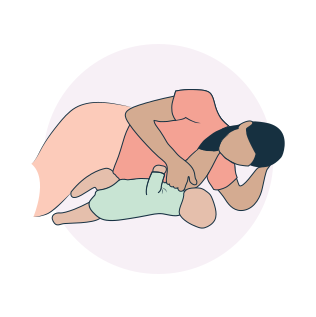
      Side-Lying Hold

      1. For the right breast, lie on your right side with your baby facing you.
      2. Pull your baby close. Your baby’s mouth should be level with your nipple.
      3. In this position, you can cradle your baby’s back with your left arm and support yourself with your right arm and/or pillows.
      4. Keep loose clothing and bedding away from your baby.
      5. Reverse for the left breast.

      This hold is useful when:

      • You had a C-section
      • You want to rest while baby feeds
      • You are breastfeeding in the middle of the night
      • You and your baby are comfortable in this position
      Cross Cradle Hold 1

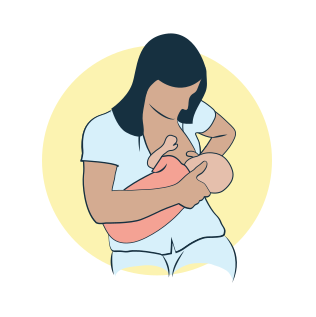
      Cross-Cradle Hold

      1. For the right breast, use your left arm to hold your baby’s head at your right breast and baby’s body toward your left side. A pillow across your lap can help support your left arm.
      2. Gently place your left hand behind your baby’s ears and neck, with your thumb and index finger behind each ear and your palm between baby’s shoulder blades. Turn your baby’s body toward yours so your tummies are touching.
      3. Hold your breast as if you are squeezing a sandwich. To protect your back, avoid leaning down to your baby. Instead, bring your baby to you.
      4. As your baby’s mouth opens, push gently with your left palm on baby’s head to help them latch on. Make sure you keep your fingers out of the way.
      5. Reverse for the left breast.

      This hold is useful when:

      • Your baby is premature
      • Your baby has a weak suck
      • Your baby needs help to stay latched
      • Your baby needs extra head support
      • You and your baby are comfortable in this position
      Football Hold

      Clutch or “Football” Hold

      1. For the right breast, hold your baby level, facing up, at your right side.
      2. Put your baby’s head near your right nipple and support their back and legs under your right arm.
      3. Hold the base of your baby’s head with your right palm. A pillow underneath your right arm can help support your baby’s weight.
      4. To protect your back, avoid leaning down to your baby. Bring baby to you instead.
      5. Reverse for the left breast.

      This hold is useful when:

      • You had a C-section
      • You have large breasts
      • You have flat or inverted nipples
      • You have a strong milk let-down
      • You are breastfeeding twins
      • Your baby likes to feed in an upright position
      • Your baby has reflux
      • You and your baby are comfortable in this position
      Breastfeeding Holds

      Cradle Hold

      1. For the right breast, cradle your baby with your right arm. Your baby will be on their left side across your lap, facing you at nipple level.
      2. Your baby’s head will rest on your right forearm with your baby’s back along your inner arm and palm.
      3. Turn your baby’s tummy toward your tummy. Your left hand is free to support your breast, if needed. Pillows can help support your arm and elbow.
      4. To protect your back, avoid leaning down to your baby. Instead, bring your baby to you.
      5. Reverse for the left breast.

      This hold is useful when:

      • Your baby needs help latching on
      • You and your baby are comfortable in this position
      Breastfeeding Holds

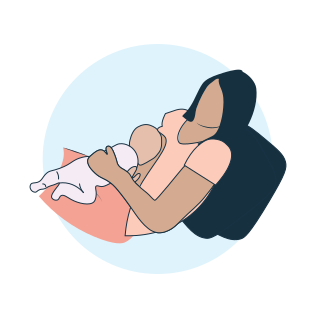
      Laid-Back Hold

      1. Lean back on a pillow with your baby’s tummy touching yours and their head at breast level. Some moms find that sitting up nearly straight works well. Others prefer to lean back and lie almost flat.
      2. You can place your baby’s cheek near your breast, or you may want to use one hand to hold your breast near your baby. It’s up to you and what you think feels best.
      3. Your baby will naturally find your nipple, latch, and begin to suckle.

      This hold is useful when:

      • Your baby is placed on your chest right after birth
      • You have a strong milk let-down
      • You have large breasts
      • You and your baby are comfortable in this position