Eat at least 3 times each day for energy to care for yourself and your family!
Eating a variety of food gives you the nutrients you need to stay healthy.
Choose whole grains such as oatmeal, brown rice, whole wheat bread and pasta.
Drink water instead of sweetened beverages.
Physical Activity
Did you know that physical activity gives you more energy? It also lifts your mood, helps you feel more relaxed and sleep better! Slowly build up to 30 minutes or more of moderate-intensity activities each day.
h3 hide
Some ideas of moderate-intensity activities:
Walk Fast
Ride a bike
Swim
Dance
Ask your health care provider about the best physical activity for you.
Emotional Health
It is common to feel a mix of emotions after having a baby. Giving birth, changing hormones and sleep patterns can make you feel sad. New moms may cry easily, have trouble eating or sleeping and feel overwhelmed caring for a new baby. To help with these feelings, eat well, rest often and ask your family and friends for support during this time.
If you feel sad and upset for more than two weeks, or are afraid you may hurt yourself or your baby, talk with your doctor or WIC staff. You may have postpartum depression.
Routine Doctor Visits
Check in with your doctor annually.
Keep up-to-date on the recommended schedule of immunizations.
Ask about birth control options that will support breastfeeding and ensure optimal time between pregnancies to fully recover from the delivery process.
Folic Acid
All women who can become pregnant should take a multivitamin with 400 micrograms of folic acid every day. You can lower your chance of having a baby with birth defects of the brain or spine by having enough folic acid in your body. Along with a multivitamin, choose foods high in folic acid.
Foods with folic acid:
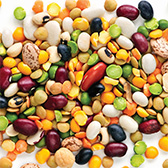
Beans
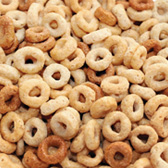
Fortified cereals
Orange juice
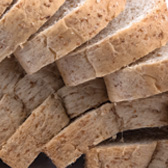
Enriched bread and pasta
Dark green leafy vegetables
The folic acid needs to be in your body before you get pregnant and in the first month of your pregnancy.
Breastfeeding
is Best Feeding
Health care providers recommend breastfeeding for two years and longer if you choose.
Breastmilk has just the right nutrients for growth and development.
Breastmilk helps baby fight infection and be sick less often. Breastfeeding helps protect mom’s health too.
Breastfeeding promotes bonding with baby.
Avoid Alcohol, Tobacco and Drugs
Do not smoke, drink or use drugs. Use medications as directed. The choices you make today can affect your family’s health now and in the future.
Quitting is hard. Ask WIC staff where you can go for help. You are not alone. There are people who can help you quit, give you tips, and support you along the way.
For support with quitting tobacco or nicotine products visit www.quitnow.net. For support with quitting alcohol or other drugs visit www.findtreatment.gov.
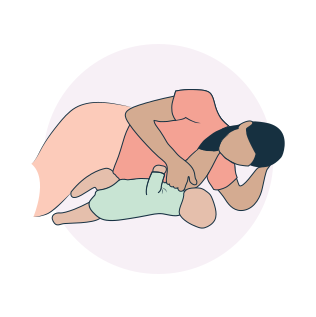
For the right breast, lie on your right side with your baby facing you.
Pull your baby close. Your baby’s mouth should be level with your nipple.
In this position, you can cradle your baby’s back with your left arm and support yourself with your right arm and/or pillows.
Keep loose clothing and bedding away from your baby.
Reverse for the left breast.
This hold is useful when:
You had a C-section
You want to rest while baby feeds
You are breastfeeding in the middle of the night
You and your baby are comfortable in this position
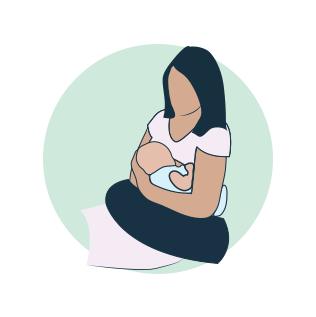
Cross-Cradle Hold
For the right breast, use your left arm to hold your baby’s head at your right breast and baby’s body toward your left side. A pillow across your lap can help support your left arm.
Gently place your left hand behind your baby’s ears and neck, with your thumb and index finger behind each ear and your palm between baby’s shoulder blades. Turn your baby’s body toward yours so your tummies are touching.
Hold your breast as if you are squeezing a sandwich. To protect your back, avoid leaning down to your baby. Instead, bring your baby to you.
As your baby’s mouth opens, push gently with your left palm on baby’s head to help them latch on. Make sure you keep your fingers out of the way.
Reverse for the left breast.
This hold is useful when:
Your baby is premature
Your baby has a weak suck
Your baby needs help to stay latched
Your baby needs extra head support
You and your baby are comfortable in this position
Clutch or “Football” Hold
For the right breast, hold your baby level, facing up, at your right side.
Put your baby’s head near your right nipple and support their back and legs under your right arm.
Hold the base of your baby’s head with your right palm. A pillow underneath your right arm can help support your baby’s weight.
To protect your back, avoid leaning down to your baby. Bring baby to you instead.
Reverse for the left breast.
This hold is useful when:
You had a C-section
You have large breasts
You have flat or inverted nipples
You have a strong milk let-down
You are breastfeeding twins
Your baby likes to feed in an upright position
Your baby has reflux
You and your baby are comfortable in this position
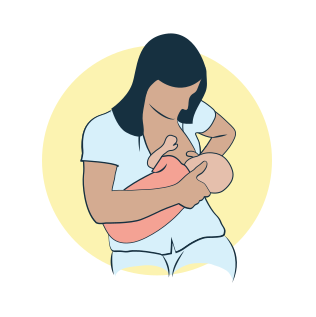
Cradle Hold
For the right breast, cradle your baby with your right arm. Your baby will be on their left side across your lap, facing you at nipple level.
Your baby’s head will rest on your right forearm with your baby’s back along your inner arm and palm.
Turn your baby’s tummy toward your tummy. Your left hand is free to support your breast, if needed. Pillows can help support your arm and elbow.
To protect your back, avoid leaning down to your baby. Instead, bring your baby to you.
Reverse for the left breast.
This hold is useful when:
Your baby needs help latching on
You and your baby are comfortable in this position
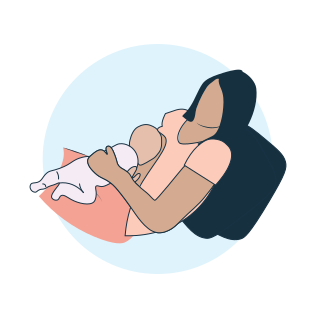
Laid-Back Hold
Lean back on a pillow with your baby’s tummy touching yours and their head at breast level. Some moms find that sitting up nearly straight works well. Others prefer to lean back and lie almost flat.
You can place your baby’s cheek near your breast, or you may want to use one hand to hold your breast near your baby. It’s up to you and what you think feels best.
Your baby will naturally find your nipple, latch, and begin to suckle.
This hold is useful when:
Your baby is placed on your chest right after birth
You have a strong milk let-down
You have large breasts
You and your baby are comfortable in this position