Skip to Content Skip to Footer
Indiana WIC logo
  • Breastfeeding
    • Breastfeeding
      Breastfeeding & Safe Sleep
    • Breastfeeding
      Breastfeeding Peer Counselor
    • Breastfeeding
      Paced Feeding
    • Breastfeeding
      Breastfeeding Laws
    • Breastfeeding
      What is my baby trying to tell me?
    • Breastfeeding
      Caring For Yourself After Loss
    • Breastfeeding
      Human Milk Storage Guidelines
  • Nutrition and Health
    • Nutrition and Health
      Pregnancy
    • Nutrition and Health
      Postpartum (After Pregnancy)
    • Nutrition and Health
      Stay Healthy
    • Nutrition and Health
      Infants
    • Nutrition and Health
      Children
    • Nutrition and Health
      Fathers
    • Nutrition and Health
      Families
  • WIC Resources
    • WIC Resources
      Program Booklet for Participants
    • WIC Resources
      Eligibility Guidelines
    • WIC Resources
      INWIC App
    • WIC Resources
      INWIC Mobile App Quick Reference Guide
    • WIC Resources
      WIC EBT Card Guide
    • WIC Resources
      Indiana eFMNP
  • English
    • Spanish
    • Burmese
    • hakha chin
    • Creole
    • Arabic

Indiana eFMNP WIC and Senior Farmers' Market Nutrition Programs

Benefits are issued June - September
Benefits are accepted June - October

  • Home
  • Indiana eFMNP

Who is eligible?

  • Certified WIC clients over the age of 4 months and seniors 60+ who meet income guidelines, are eligible for eFMNP benefits once per year.

How do you get eFMNP benefits?

  • Eligible WIC clients are issued benefits by their local WIC clinic.
  • Eligible seniors are issued benefits by participating Area Agencies on Aging.
MyMarketLink
  • Indiana eFMNP benefits are digital! After benefits are issued, recipients receive an email with instructions for downloading and registering the MyMarketLink mobile app.
Green location pin with leafy top.
Find participating merchants, track benefits, and pay for produce all on your smart device.
app-store
play-store-icon
How do I shop?
  1. Find the selling locations of approved farmers (merchants) in the MyMarketLink app.
  2. Visit an approved farmer and make your selection of eligible fruits, vegetables or cut herbs.
  3. Present the QR code in your MyMarketLink app for payment.
eFMNP Benefit Guide
  • eFMNP benefits must be spent within 30 calendar days of issuance.
  • eFMNP benefits are only accepted at approved farmers, not a grocery store.
  • Benefits cannot be exchanged for cash.
  • Purchases with benefits cannot be returned.
  • eFMNP benefits can be spent in any amount up to your available balance. Farmers may accept an additional payment method like cash or SNAP benefits if your items cost more than your remaining eFMNP benefits.
  • Sales tax is not charged.
  • If you think you have been treated unfairly, contact your local agency or the state office.
For assistance with Indiana eFMNP, contact your local agency or the State office.
  • 800-522-0874
  • WICCommoditiesPrograms@health.in.gov

Fruits and vegetables harvest calendar

Plan your visit based on your favorite seasonal produce.

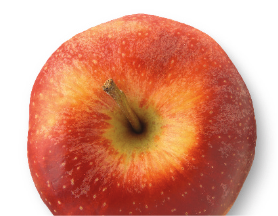
fresh red apple

Apples

July - October

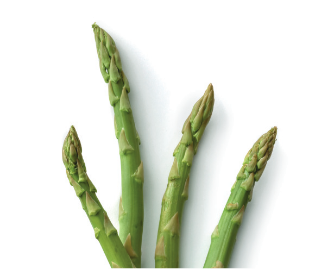
Green asparagus spears

Asparagus

April - June

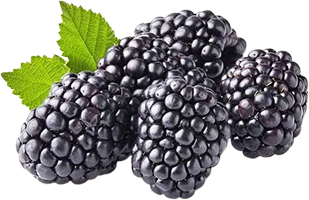
Cluster of ripe blackberries

Blackberries

June - August

Eligibility Card

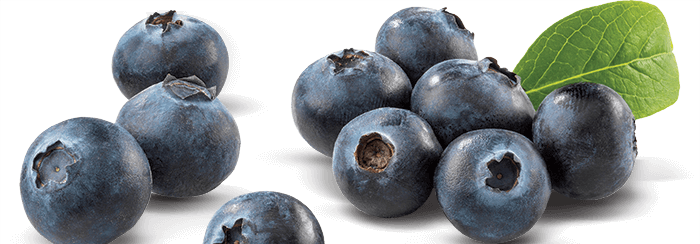
Blueberries

June - September

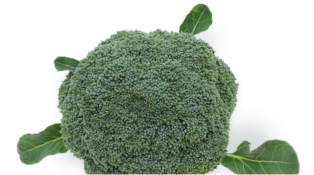
Fresh broccoli head with green leaves.

Broccoli

May - July

Cantaloupe slice with bite marks.

Cantaloupe

July - October

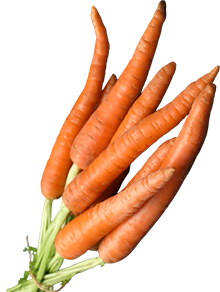
Bunch of orange carrots with stems

Carrots

July - November

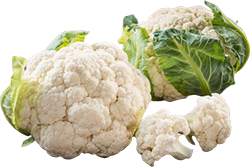
fresh green cauliflower

Cauliflower

May - June

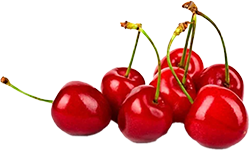
red fresh cherries

Cherries

June - July

PeasOnWhite

Green Peas

April - June

blackberries

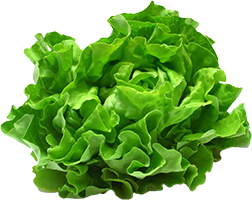
Lettuce

April - June

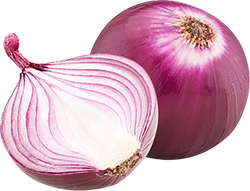
Whole and sliced red onion

Onions

July - November

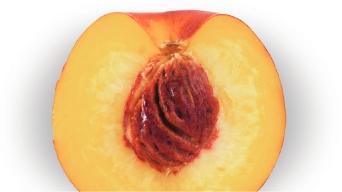
Half peach revealing pit and vibrant flesh.

Peaches

June - September

pulms

Plums

July - September

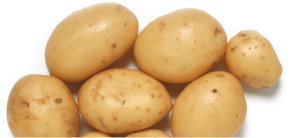
brown potatoes

Potatoes

July - October

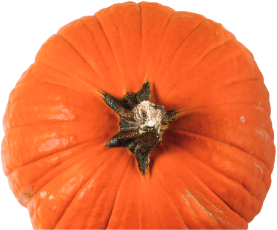
Bright orange pumpkin viewed from above.

Pumpkins

September - October

strawberry dish

Raspberries

June - September

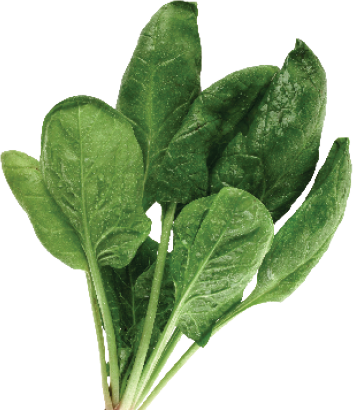
Spinachh

Spinach

April - June

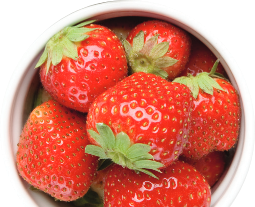
Fresh strawberries filling a white bowl.

Strawberries

May - July

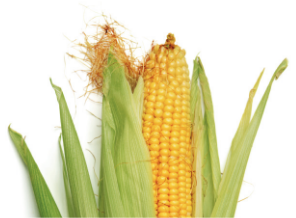
Ears of corn with husk

Sweet Corn

May - September

Red tomatoes on vine

Tomatoes

May - September

Slice of watermelon

Watermelon

July - October

eFMNP benefits are only accepted at approved farmers’ markets, not grocery stores.

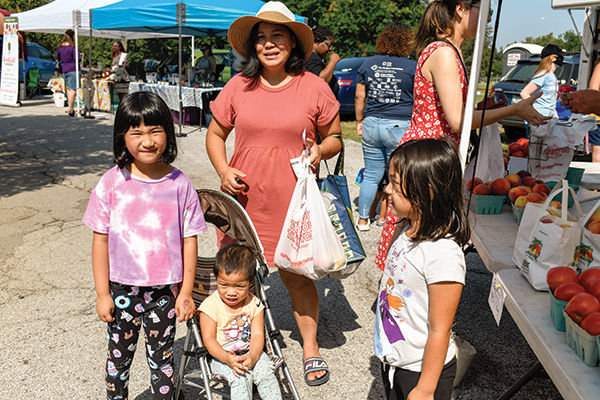
A FUN OUTDOOR SHOPPING EXPERIENCE FOR THE WHOLE FAMILY!

Indiana’s farmers’ markets are growing and thriving. When you buy from local farmers, you can buy the freshest produce for your family and help support your local community.

Indiana eFMNP benefits can be used to purchase a variety of fresh, locally grown, unprocessed fruits and vegetables from approved local farmers at farm stands or farmers markets across Indiana. Benefits are accessed and spent using a mobile app on your smart device.

You can use eFMNP benefits with approved farmers within 30 calendar days of receiving them.

CAN BUY

  • Fresh Fruits
  • Fresh Vegetables
  • Cut Edible Herbs
Picnic

CANNOT BUY

  • Honey
  • Eggs
  • Nuts
  • Flowers
  • Baked Goods
  • Processed Foods
  • Plants
  • Meat/Fish
  • Dried Fruits (including raisins)
  • Jams
  • Jellies
  • Syrup
  • Juices
  • Cider
  • Cheese
  • Dried Beans
  • Miniature Gourds
99742_IN_WIC_F
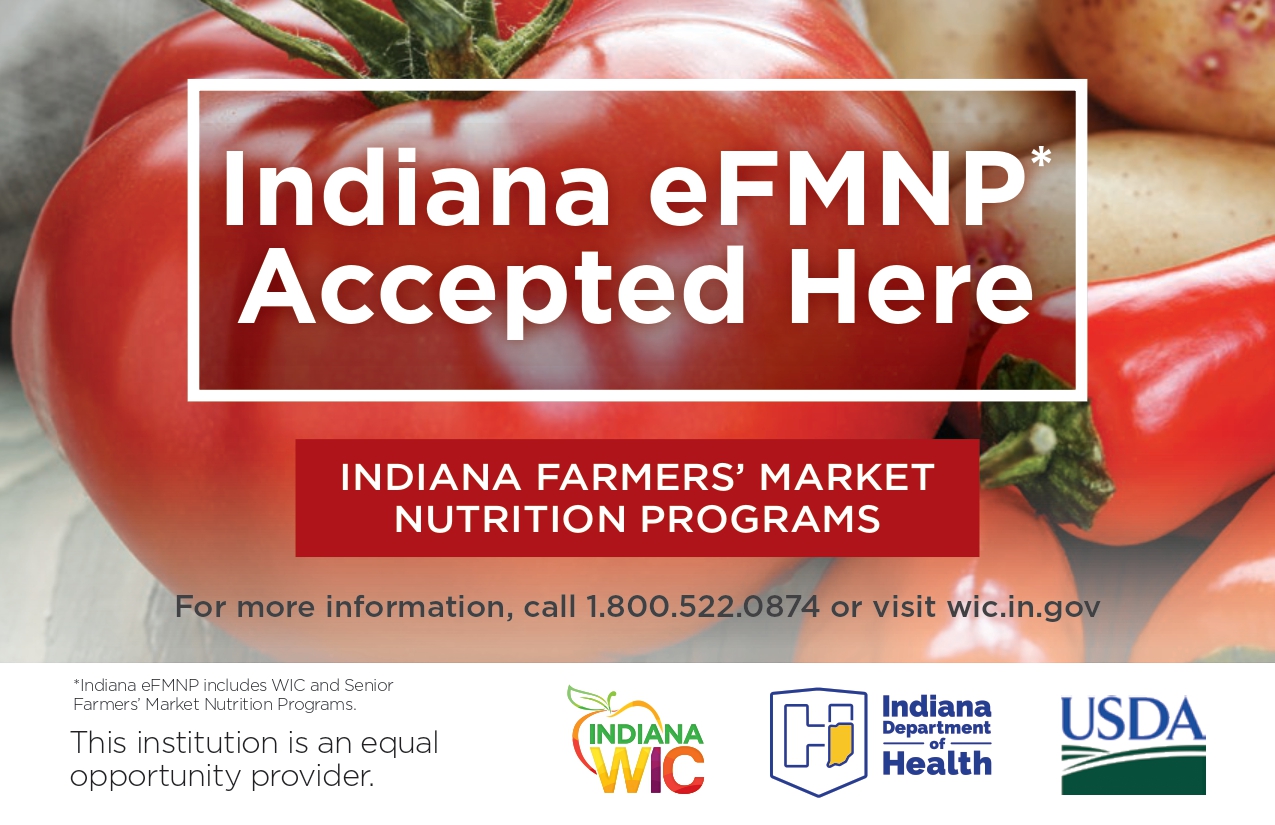
eFMNP benefits are only accepted by approved farmers who display this sign.
Logo for Indiana WIC, a supplemental nutrition program for women, infants, and children.

Contact Us

2 North Meridian Street, 5th Floor Indianapolis, Indiana 46204
800-522-0874
wic.in.gov

Learn More

  • How to Apply
  • Approved Foods
  • Find a Clinic

Resources

WIC Breastfeeding Support
  • INWIC Android App
  • INWIC Apple App
  • Indiana WIC Link to Facebook page
  • Indiana WIC on Instagram

This institution is an equal opportunity provider.

Cookie PolicyPrivacy Policy

© Brush Art Corporation

  • Email
  • SMS
If you are using multiple emails, separate them with commas.

    SMS Communication Consent

    ×
    If you are using multiple emails, separate them with commas.

      Communication Preferences

      ×
      Download
      Feed Popup
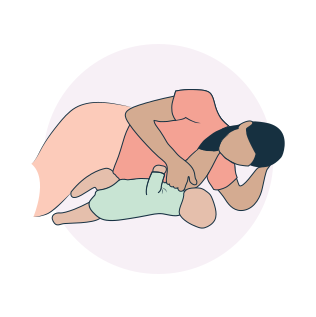
      Side Lying Hold

      Side-Lying Hold

      1. For the right breast, lie on your right side with your baby facing you.
      2. Pull your baby close. Your baby’s mouth should be level with your nipple.
      3. In this position, you can cradle your baby’s back with your left arm and support yourself with your right arm and/or pillows.
      4. Keep loose clothing and bedding away from your baby.
      5. Reverse for the left breast.

      This hold is useful when:

      • You had a C-section
      • You want to rest while baby feeds
      • You are breastfeeding in the middle of the night
      • You and your baby are comfortable in this position
      Cross Cradle Hold

      Cross-Cradle Hold

      1. For the right breast, use your left arm to hold your baby’s head at your right breast and baby’s body toward your left side. A pillow across your lap can help support your left arm.
      2. Gently place your left hand behind your baby’s ears and neck, with your thumb and index finger behind each ear and your palm between baby’s shoulder blades. Turn your baby’s body toward yours so your tummies are touching.
      3. Hold your breast as if you are squeezing a sandwich. To protect your back, avoid leaning down to your baby. Instead, bring your baby to you.
      4. As your baby’s mouth opens, push gently with your left palm on baby’s head to help them latch on. Make sure you keep your fingers out of the way.
      5. Reverse for the left breast.

      This hold is useful when:

      • Your baby is premature
      • Your baby has a weak suck
      • Your baby needs help to stay latched
      • Your baby needs extra head support
      • You and your baby are comfortable in this position
      Football Hold

      Clutch or “Football” Hold

      1. For the right breast, hold your baby level, facing up, at your right side.
      2. Put your baby’s head near your right nipple and support their back and legs under your right arm.
      3. Hold the base of your baby’s head with your right palm. A pillow underneath your right arm can help support your baby’s weight.
      4. To protect your back, avoid leaning down to your baby. Bring baby to you instead.
      5. Reverse for the left breast.

      This hold is useful when:

      • You had a C-section
      • You have large breasts
      • You have flat or inverted nipples
      • You have a strong milk let-down
      • You are breastfeeding twins
      • Your baby likes to feed in an upright position
      • Your baby has reflux
      • You and your baby are comfortable in this position
      Breastfeeding Holds

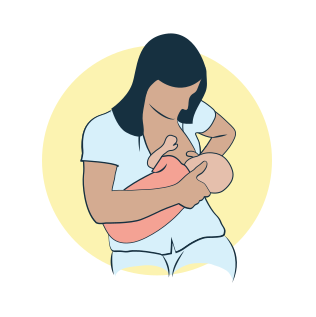
      Cradle Hold

      1. For the right breast, cradle your baby with your right arm. Your baby will be on their left side across your lap, facing you at nipple level.
      2. Your baby’s head will rest on your right forearm with your baby’s back along your inner arm and palm.
      3. Turn your baby’s tummy toward your tummy. Your left hand is free to support your breast, if needed. Pillows can help support your arm and elbow.
      4. To protect your back, avoid leaning down to your baby. Instead, bring your baby to you.
      5. Reverse for the left breast.

      This hold is useful when:

      • Your baby needs help latching on
      • You and your baby are comfortable in this position
      Breastfeeding Holds

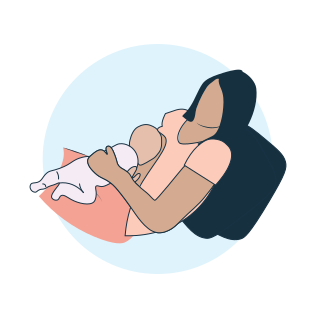
      Laid-Back Hold

      1. Lean back on a pillow with your baby’s tummy touching yours and their head at breast level. Some moms find that sitting up nearly straight works well. Others prefer to lean back and lie almost flat.
      2. You can place your baby’s cheek near your breast, or you may want to use one hand to hold your breast near your baby. It’s up to you and what you think feels best.
      3. Your baby will naturally find your nipple, latch, and begin to suckle.

      This hold is useful when:

      • Your baby is placed on your chest right after birth
      • You have a strong milk let-down
      • You have large breasts
      • You and your baby are comfortable in this position