Skip to Content Skip to Footer
Indiana WIC logo
  • Breastfeeding
    • Breastfeeding
      Breastfeeding & Safe Sleep
    • Breastfeeding
      Breastfeeding Peer Counselor
    • Breastfeeding
      Paced Feeding
    • Breastfeeding
      Breastfeeding Laws
    • Breastfeeding
      What is my baby trying to tell me?
    • Breastfeeding
      Caring For Yourself After Loss
    • Breastfeeding
      Human Milk Storage Guidelines
  • Nutrition and Health
    • Nutrition and Health
      Pregnancy
    • Nutrition and Health
      Postpartum (After Pregnancy)
    • Nutrition and Health
      Stay Healthy
    • Nutrition and Health
      Infants
    • Nutrition and Health
      Children
    • Nutrition and Health
      Fathers
    • Nutrition and Health
      Families
  • WIC Resources
    • WIC Resources
      Program Booklet for Participants
    • WIC Resources
      Eligibility Guidelines
    • WIC Resources
      INWIC App
    • WIC Resources
      INWIC Mobile App Quick Reference Guide
    • WIC Resources
      WIC EBT Card Guide
    • WIC Resources
      Indiana eFMNP
  • English
    • Spanish
    • Burmese
    • hakha chin
    • Creole
    • Arabic

Infant Feeding Guide

  • Home
  • Eat·Grow·Live Healthy
  • Infants
  • Infant Feeding Guide

Infographic Available*

Feeding <br>a 0-3 <br>Month Old*

Feeding
a 0-3
Month Old*

Feeding a 0-3 Month Old*

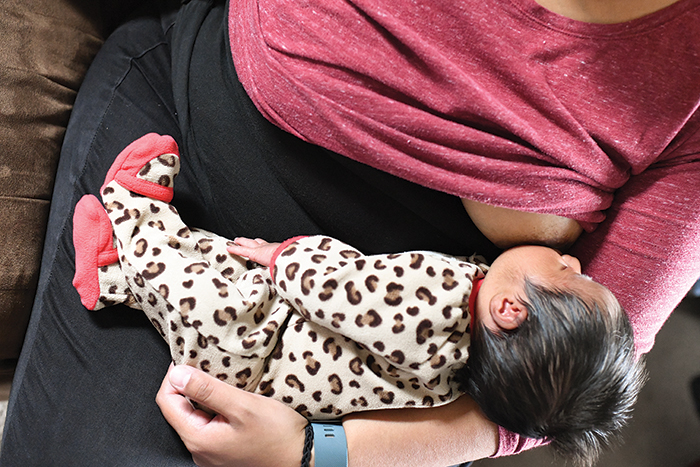
Newborns have tiny stomachs and need to be fed often. As they grow, babies can hold more milk so feedings may become further apart and take less time. In the first few weeks, you may need to wake your baby to feed if they sleep longer than 4 hours.

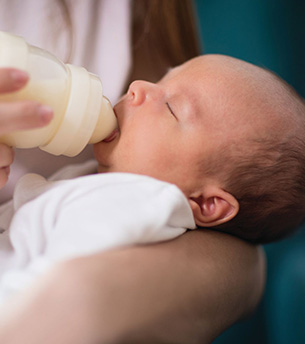
If feeding human milk from a bottle, it's helpful to offer smaller amounts at a time to mimic how the baby would feed at the breast. Paced bottle feeding will also help the baby eat more slowly and prevent overfeeding.
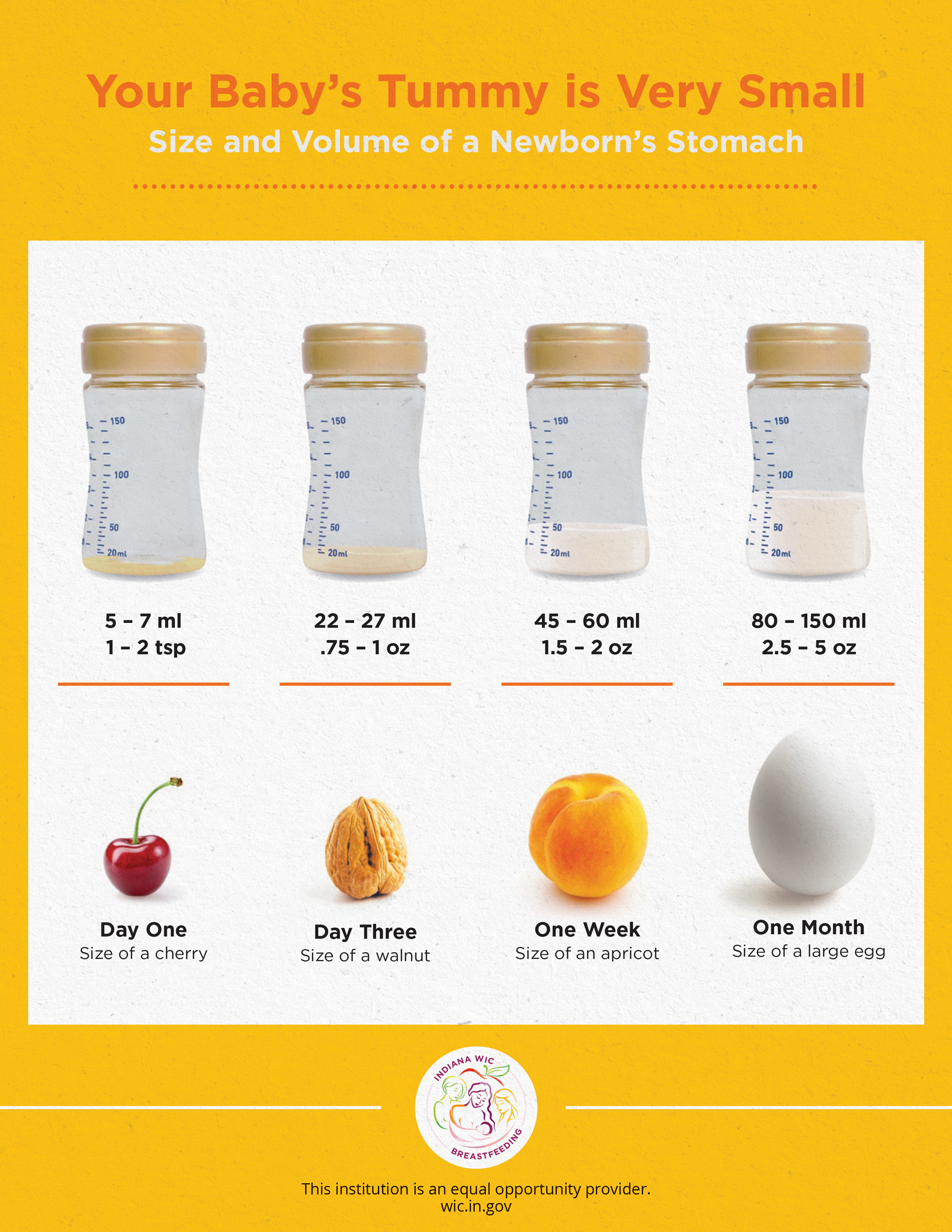
Your Babys Tummy is Very Small
View and share the Your Babys Tummy Is Very Small Infographic
https://indiana.wicresources.org/wp-content/uploads/sites/5/2026/02/Your_Babys_Tummy_Is_Very_Small.pdf
  • Human Milk Click Here
  • Infant Formula Click Here

Human Milk Click Here

Breastfeed every 1½-3 hours, or 8-12 times in 24 hours.

If bottle feeding, offer a small amount at a time, about 2-3 oz.

Your Babys Tummy is Very Small
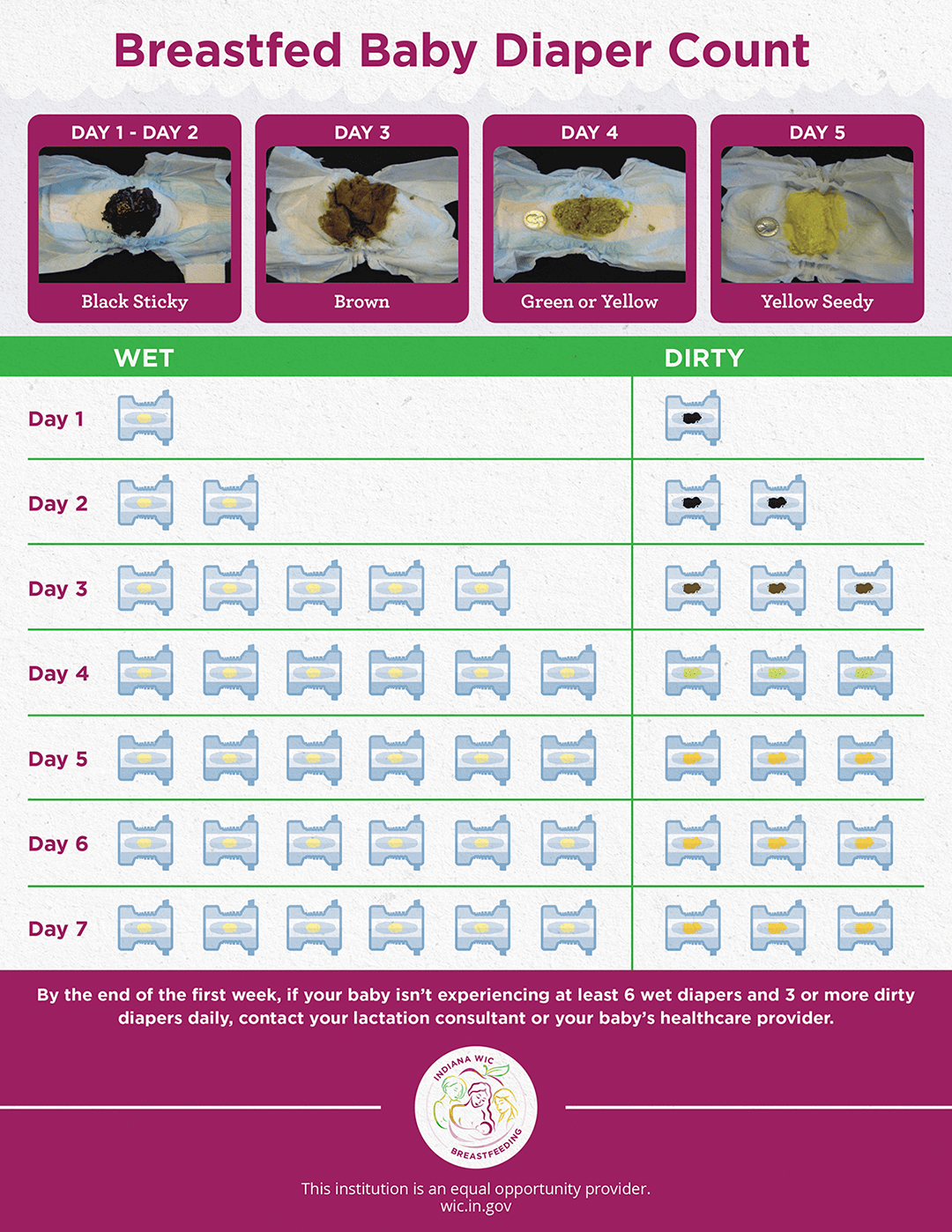
View and share the Breastfed Baby Diaper Count Infographic
https://indiana.wicresources.org/wp-content/uploads/sites/5/2026/02/Breastfed_Baby_Diaper_Count.pdf

Infant Formula Click Here

When baby is first born, they only need 1-2 oz. of iron-fortified infant formula at a time. After the first few days, newborns usually take 2-3 oz. of formula every 3-4 hours.

By the end of the first month, your newborn may take up to 4 oz. every 4 hours.

6-8 lbs: 15-20 oz./day
8-10 lbs: 20-25 oz./day
10-12 lbs: 25-32 oz./day

Feeding a 4-5 <br>Month Old

Feeding a 4-5
Month Old

Feeding a 4-5 Month Old

Your baby may start to feed on a schedule. Instead of focusing on fixed amounts, let your baby tell you when they have had enough.

During growth spurts, at 2 to 4 weeks, 6 weeks, 3-4 months, and 6 months, your baby may need to eat more often.

  • Human Milk Click Here
  • Infant Formula Click Here

Human Milk Click Here

Breastfeed your baby on-demand, at least 7-9 times in 24 hours.

If bottle feeding, offer a small amount at a time, about 4-6 oz.

When your baby starts teething, they may want to nurse more often.

Infant Formula Click Here

Your baby needs about 4-6 oz. of iron-fortified formula every 3-4 hours, a total of 25-45 oz. per day.

Before teeth come in, wipe gums with a soft, clean wash cloth after each feeding, especially before bed.

Feeding a 6-7 <br>Month Old

Feeding a 6-7
Month Old

Feeding a 6-7 Month Old

Offer solids from a spoon or as finger foods. Load the spoon with food then let your baby feed themselves. Do not give foods or cereals in a bottle.

  • Human Milk Click Here
  • Infant Formula Click Here

Human Milk Click Here

Continue to breastfeed on-demand, at least 4-6 times in 24 hours.

If your baby seems less interested in nursing after you introduce solids, try nursing before you offer solids.

Babies may experience a growth spurt around 6 months of age and may feed more often.

Try offering human milk in a cup.

Infant Formula Click Here

Offer 24-32 oz. per day of iron-fortified infant formula.

Offer formula in a cup.

  • Grains Click Here
  • Vegetables Click Here
  • Fruits Click Here
  • Proteins Click Here

Grains Click Here

Use human milk or formula to prepare 2-4 Tbsp. iron-fortified infant cereal. Offer twice per day.

2-4 Tbsp. of dry bread, baby crackers, and cereal. Offer twice per day.

Spoon

Vegetables Click Here

4-8 Tbsp. per day.

Cooked, pureed, mashed vegetables.

Spoon

Fruits Click Here

4-8 Tbsp. per day.

Cooked, pureed, mashed fruits.

Applesauce, pureed peaches, or mashed banana.

Spoon

Proteins Click Here

2-4 Tbsp. per day.

Plain strained, mashed or pureed meats, poultry, eggs, fish, or legumes.

Smooth whole milk yogurt.

Smooth, creamy peanut butter, spread thin on a cracker or mixed with applesauce and cinnamon and spread on bread.

Spoon

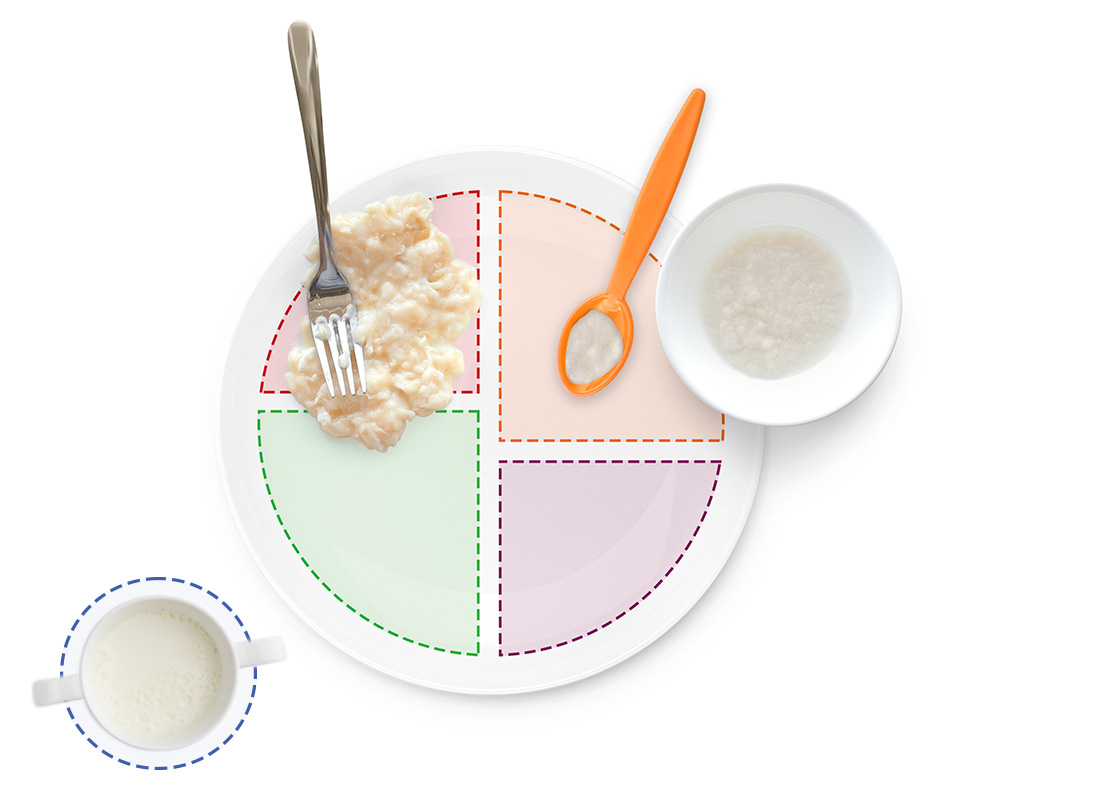
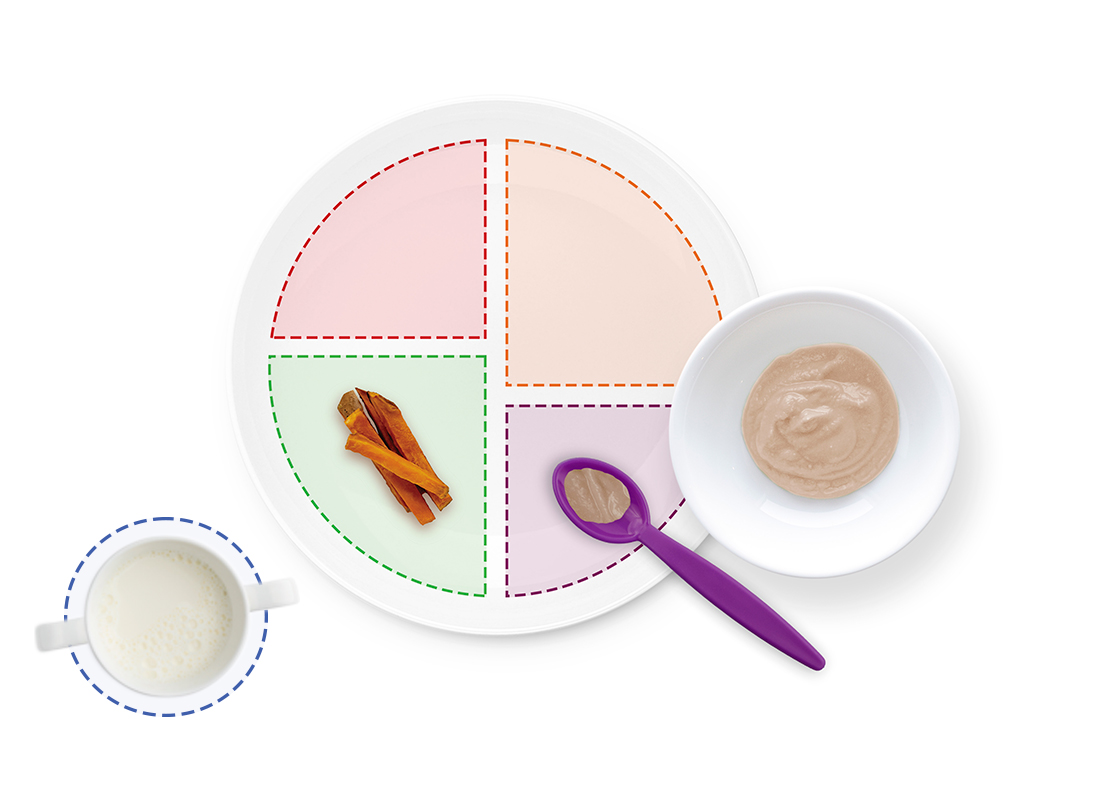
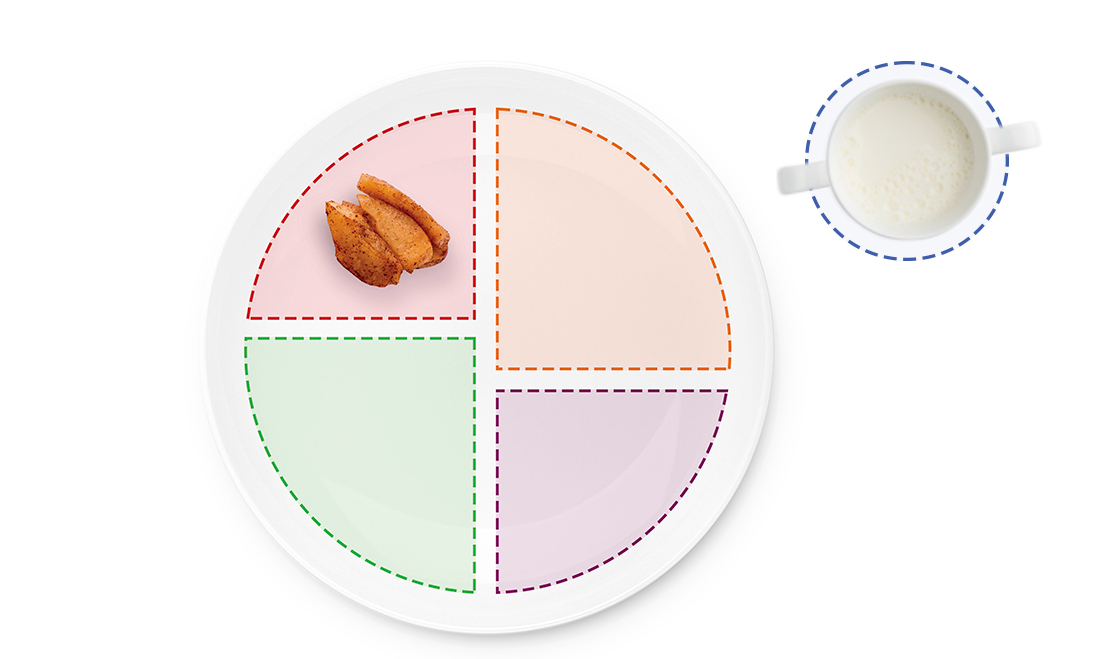
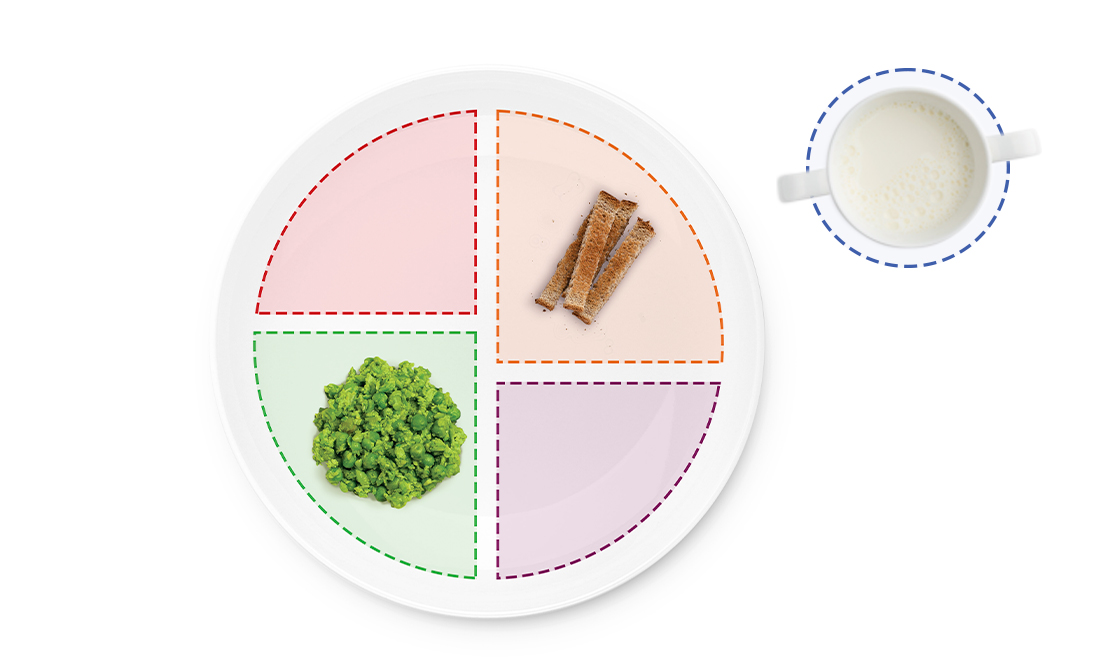
Here are some examples of what meal and snack portion sizes might look like on my plate.

Breakfast

3 Tbsp. mashed banana
Human milk or formula
Breakfast Dish
2 Tbsp. prepared infant cereal

Lunch

3 Tbsp. sliced, baked sweet potato sticks
Human milk or formula
lunch Dish
3 Tbsp. chicken puree

Snacks

3 Tbsp. baked, sliced apple
snacks Dish
Human milk or formula

Dinner

3 Tbsp. cooked, mashed peas
dinner Dish
2 Tbsp. whole grain toast sticks
Human milk or formula
Feeding a 8-9 <br>Month Old

Feeding a 8-9
Month Old

Feeding a 8-9 Month Old

As your baby grows and learns new eating skills, try different textures and foods.

  • Human Milk Click Here
  • Infant Formula Click Here

Human Milk Click Here

Continue nursing on-demand, at least 4 times in 24 hours.

If your baby seems less interested in nursing after you introduce solids, try nursing before you offer solids.

Offer human milk in a cup.

Infant Formula Click Here

24-32 oz. per day.

Offer formula in a cup.

  • Grains Click Here
  • Vegetables Click Here
  • Fruits Click Here
  • Proteins Click Here

Grains Click Here

4-8 Tbsp. per day.

Plain iron-fortified infant cereals.

Plain rice or pasta.

Baby crackers, small pieces of bread, or soft tortillas.

Spoon

Vegetables Click Here

8-12 Tbsp. per day.

Plain, cooked bite-size vegetable pieces.

Spoon

Fruits Click Here

8-12 Tbsp. per day.

Peeled soft fruit in bite-size pieces.

Unsweetened canned fruit.

Spoon

Proteins Click Here

4-8 Tbsp. per day.

Finely ground, chopped, or diced meats, poultry, eggs, fish, or cooked beans.

Cottage cheese or mild cheese.

Smooth, creamy peanut butter, spread thin.

Spoon

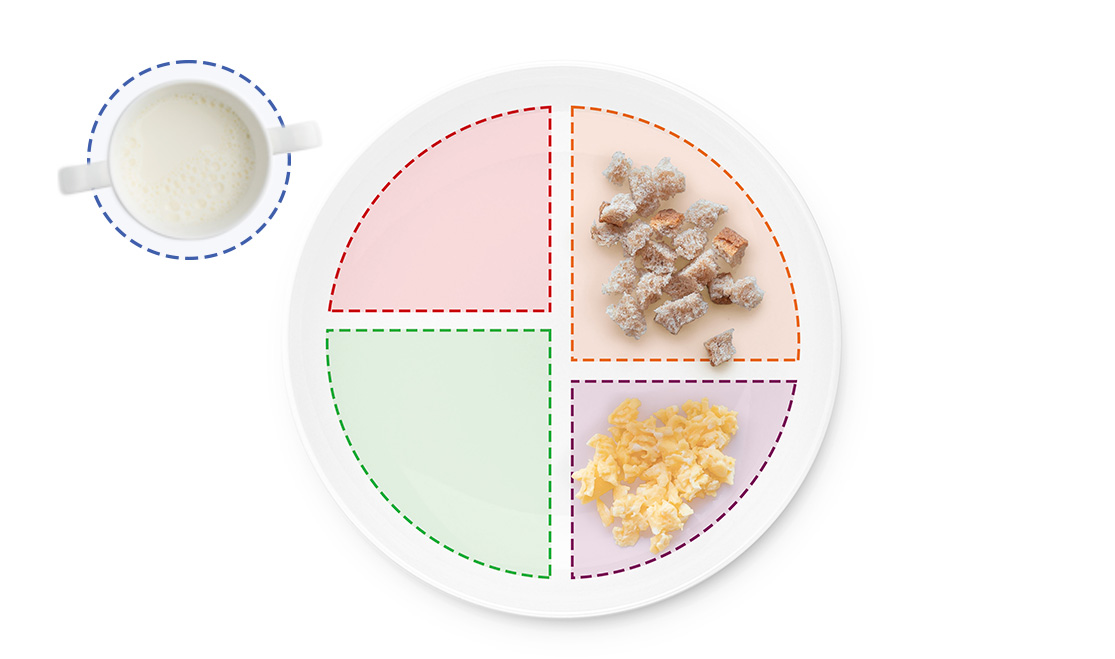
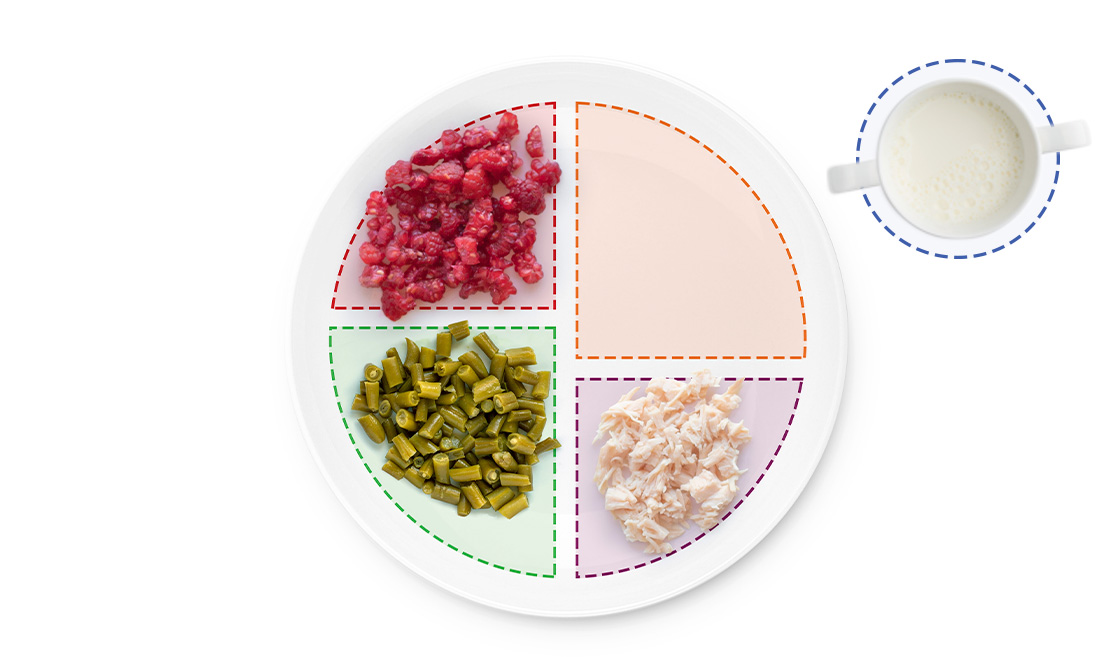
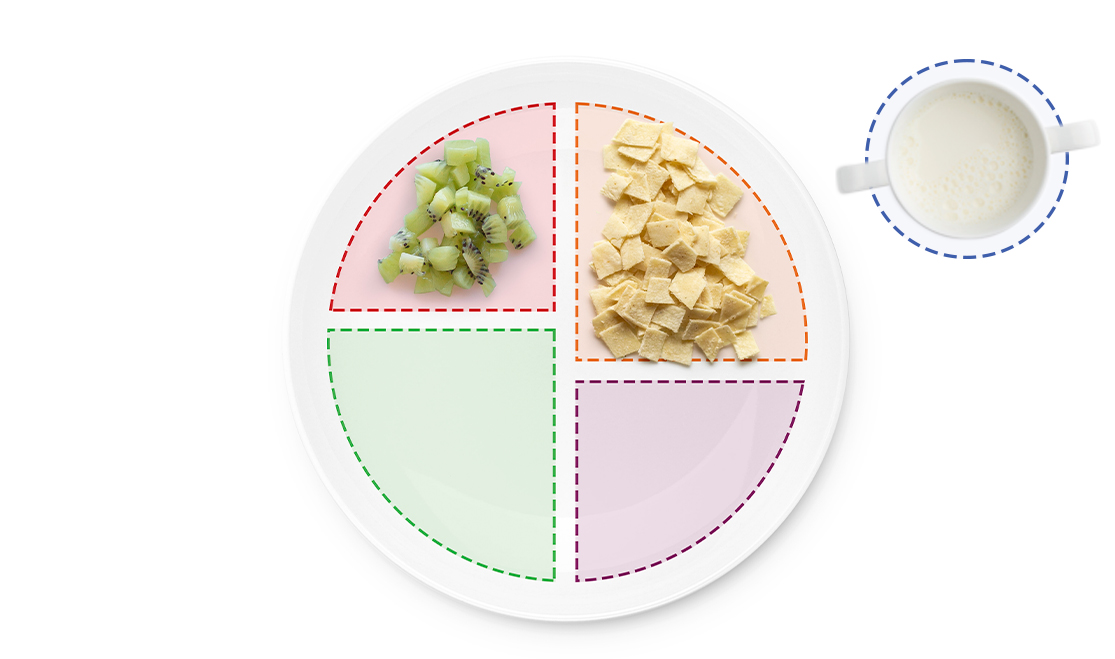
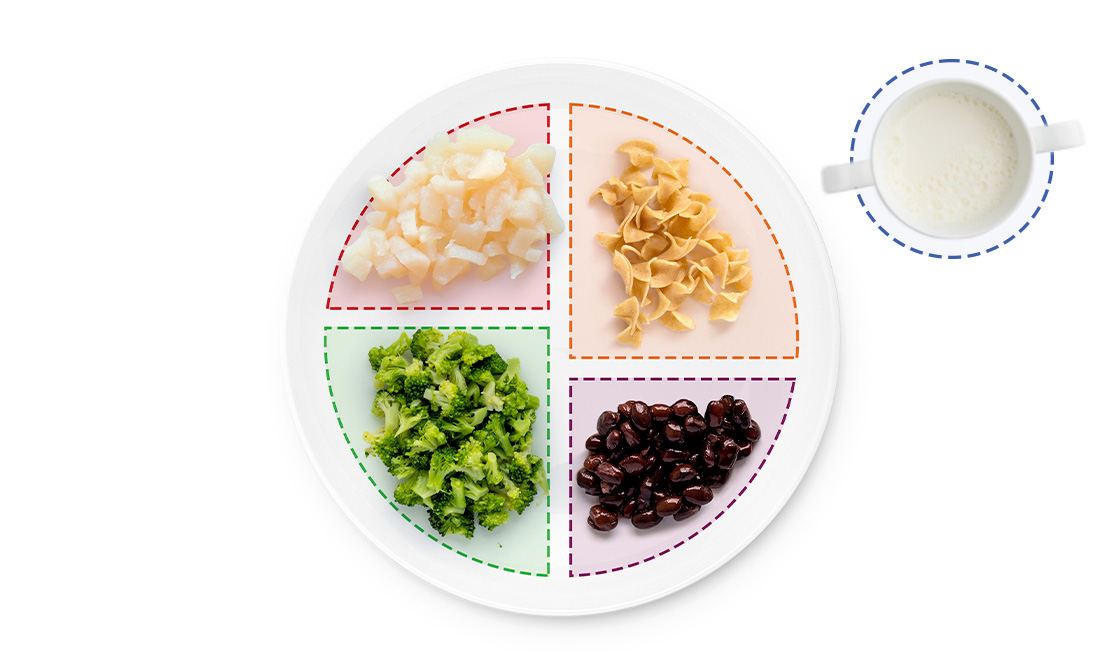
Here are some examples of what meal and snack portion sizes might look like on my plate.

Breakfast

Human milk or formula
Breakfast Dish
2 Tbsp. wheat bread, small pieces
2 Tbsp. scrambled eggs

Lunch

4 Tbsp. chopped raspberries
5 Tbsp. cooked, chopped green beans
lunch Dish
Human milk or formula
2 Tbsp. cooked, chopped chicken

Snacks

2 Tbsp. chopped kiwi
snacks Dish
Human milk or formula
3 Tbsp. cut up corn tortilla

Dinner

4 Tbsp. chopped, unsweetened canned pears
5 Tbsp. cooked, cut up broccoli
dinner Dish
Human milk or formula
3 Tbsp. cooked whole grain pasta
2 Tbsp. cooked black beans
Feeding a <br>10-12 Month <br>Old

Feeding a
10-12 Month
Old

Feeding a 10-12 Month Old

Human milk is the most important source of nutrition for your baby, even after you start offering solid foods. Start offering whole milk when your baby is one year old.

  • Human Milk Click Here
  • Infant Formula Click Here

Human Milk Click Here

Continue to nurse on-demand, 3 or more times per day.

Infant Formula Click Here

16-24 oz. per day.

Offer formula in a cup.

  • Grains Click Here
  • Vegetables Click Here
  • Fruits Click Here
  • Proteins Click Here

Grains Click Here

4-8 Tbsp. per day.

Unsweetened, mixed, and high protein cereals.

Dry toast, crackers, bread, bagels, rolls, or plain muffins.

Cooked rice and noodles.

Spoon

Vegetables Click Here

8-12 Tbsp. per day.

Cooked bite-size vegetable pieces.

Spoon

Fruits Click Here

8-12 Tbsp. per day.

Fresh fruits, peeled, and in bite-size portions.

Spoon

Proteins Click Here

4-8 Tbsp. per day.

Finely ground, chopped, or diced meats, poultry, eggs, fish, or cooked mashed beans.

Spoon

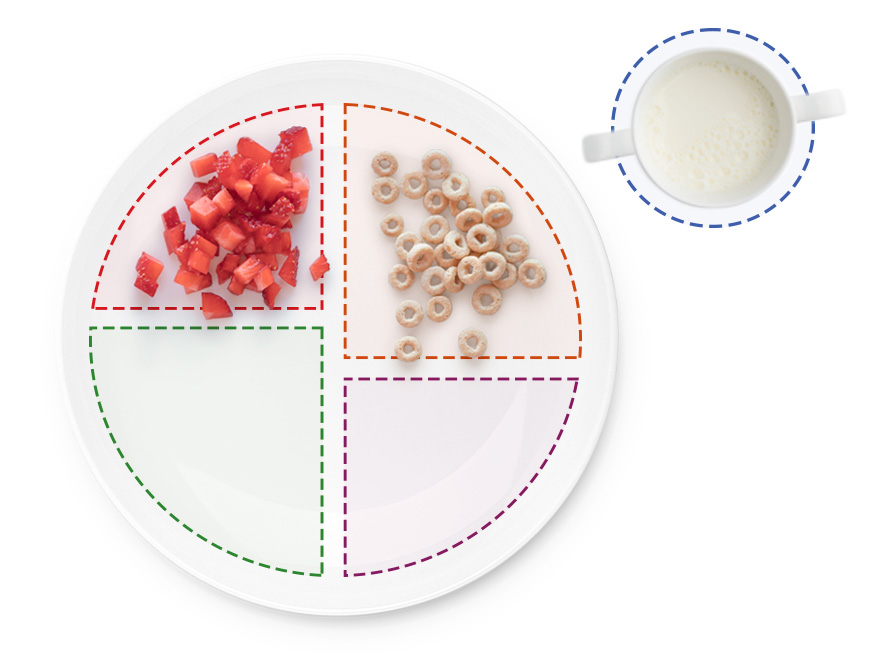
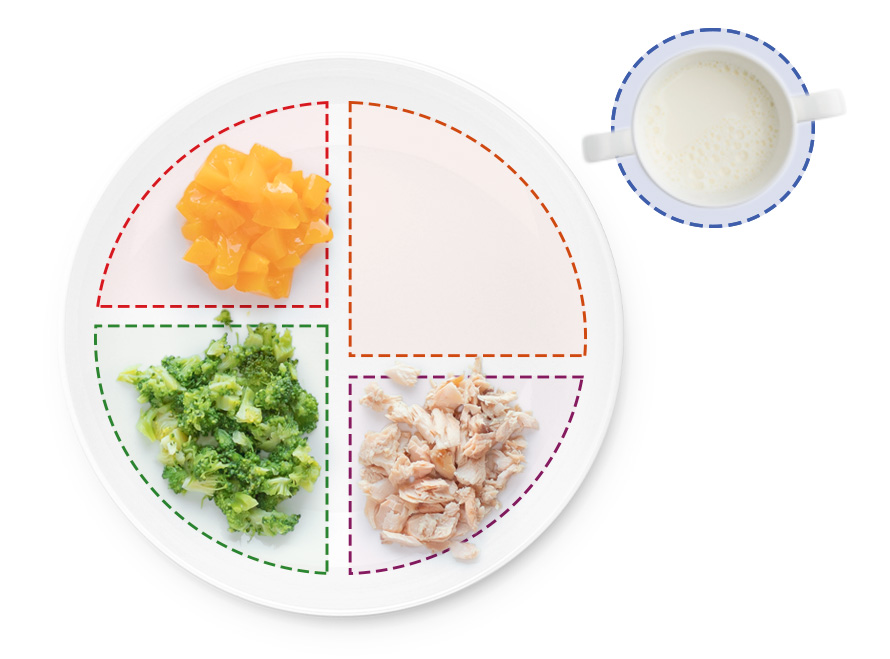
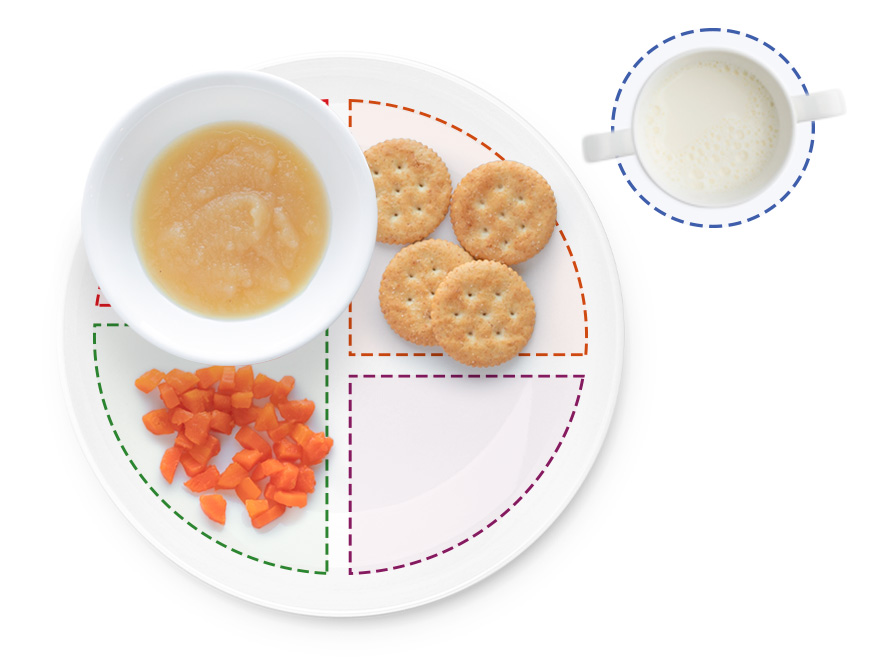
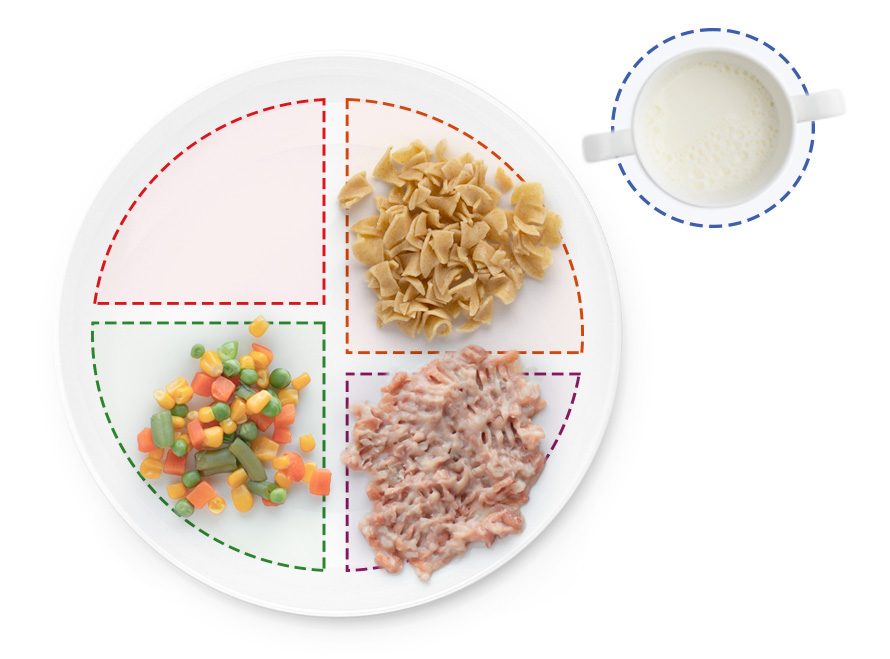
Here are some examples of what meal and snack portion sizes might look like on my plate.

Breakfast

3 Tbsp. diced strawberries
Breakfast Dish
Human milk or formula
2 Tbsp. dry cereal

Lunch

3 Tbsp. diced, unsweetened canned peaches
4 Tbsp. diced cooked broccoli
lunch Dish
Human milk or formula
3 Tbsp. canned salmon

Snacks

4 Tbsp. applesauce
3 Tbsp. chopped, cooked carrots
snacks Dish
Human milk or formula
4 whole grain crackers

Dinner

3 Tbsp. cooked mixed vegetables
dinner Dish
Human milk or formula
3 Tbsp. chopped, cooked noodles
3 Tbsp. cooked mashed pinto beans
Tips

Tips

Tips

Tips

Feeding human milk and formula:

Human milk or formula is all your baby needs for the first six months of life. Your baby’s digestive system is not ready for anything else until about 6 months of age.

Feed your baby on-demand, when they show signs of hunger, like sucking on their hands or smacking their lips. Stop feeding when they show signs they are full, like turning their head away, relaxing their hands, or falling asleep.

If bottle feeding, offer a small amount at a time. Hold baby in an almost upright position, supporting the head and neck. Do not prop the bottle. Hold the bottle in a flat, sideways position so the nipple is half full of milk. Touch the nipple to baby’s cheek or top lip and wait for baby to open their mouth wide. Do not force the bottle. After baby latches, do not lean them back or tilt the bottle up. Watch baby for pauses and lower the bottle so the nipple is empty but remains in the mouth to give baby breaks. If baby stops sucking, turns away, or falls asleep, end the feeding. Never force your baby to finish a bottle.

The American Academy of Pediatrics recommends exclusively breastfeeding for the first six months and that breastfeeding continue for 2 years, or longer, as desired by mother and baby.

breastfeeding

Feeding solid foods:

Wait to offer solid foods until your baby:

  • Can sit up and hold up their own head.
  • Opens their mouth when they see food.
  • Can close their lips around a spoon.

Try one new food at a time to watch for allergies.
Food allergies may include wheezing, rash, or diarrhea.

Babies under one year should NOT have honey, cow’s milk or other non-dairy drinks, or foods that can cause choking like nuts or whole grapes.

All babies are different.
Talk with WIC or your baby’s healthcare provider about your baby’s needs.

Early Cues

  • I'm Hungry Click Here
  • I'm Full Click Here

I'm Hungry Click Here

  • Stirring
    Stirring
  • Mouth opening
    Mouth opening
  • Turning head seeking/rooting
    Turning head seeking/rooting

I'm Full Click Here

  • Sucking slows or stops
    Sucking slows or stops
  • Hands/arms relax
    Hands/arms relax
  • Turns or pushes away
    Turns or pushes away

Introducing Peanut Butter:

Research suggests trying peanut butter as a baby may help prevent a peanut allergy later in life. This can be especially important for families with food or egg related allergies, like eczema or other skin issues. Talk with your baby’s doctor about introducing peanut butter if your family has one of these conditions.

Introduce your baby to peanut butter around 6 months of age, after they have tried other solid foods. Watch your baby for any reaction for two hours after they try it.

Mix peanut butter with water, formula, human milk, or food:

  • Thin 2 tsp. of peanut butter with 2-3 tsp. hot water, formula, or human milk. Allow to cool before serving.

  • Blend 2 tsp. of peanut butter into 2-3 Tbsp. of foods like infant cereal or pureed fruits, vegetables, chicken, or tofu.
  • Spread a small, thin smear of peanut butter on a cracker or toast stick.
This institution is an equal opportunity provider.

wic.in.gov

Logo for Indiana WIC, a supplemental nutrition program for women, infants, and children.

Contact Us

2 North Meridian Street, 5th Floor Indianapolis, Indiana 46204
800-522-0874
wic.in.gov

Learn More

  • How to Apply
  • Approved Foods
  • Find a Clinic

Resources

WIC Breastfeeding Support
  • INWIC Android App
  • INWIC Apple App
  • Indiana WIC Link to Facebook page
  • Indiana WIC on Instagram

This institution is an equal opportunity provider.

Cookie PolicyPrivacy Policy

© Brush Art Corporation

  • Email
  • SMS
If you are using multiple emails, separate them with commas.

    SMS Communication Consent

    ×
    If you are using multiple emails, separate them with commas.

      Communication Preferences

      ×
      Download
      Feed Popup
      Explore helpful infographics for newborns.
      Side Lying Hold

      Side-Lying Hold

      1. For the right breast, lie on your right side with your baby facing you.
      2. Pull your baby close. Your baby’s mouth should be level with your nipple.
      3. In this position, you can cradle your baby’s back with your left arm and support yourself with your right arm and/or pillows.
      4. Keep loose clothing and bedding away from your baby.
      5. Reverse for the left breast.

      This hold is useful when:

      • You had a C-section
      • You want to rest while baby feeds
      • You are breastfeeding in the middle of the night
      • You and your baby are comfortable in this position
      Cross Cradle Hold

      Cross-Cradle Hold

      1. For the right breast, use your left arm to hold your baby’s head at your right breast and baby’s body toward your left side. A pillow across your lap can help support your left arm.
      2. Gently place your left hand behind your baby’s ears and neck, with your thumb and index finger behind each ear and your palm between baby’s shoulder blades. Turn your baby’s body toward yours so your tummies are touching.
      3. Hold your breast as if you are squeezing a sandwich. To protect your back, avoid leaning down to your baby. Instead, bring your baby to you.
      4. As your baby’s mouth opens, push gently with your left palm on baby’s head to help them latch on. Make sure you keep your fingers out of the way.
      5. Reverse for the left breast.

      This hold is useful when:

      • Your baby is premature
      • Your baby has a weak suck
      • Your baby needs help to stay latched
      • Your baby needs extra head support
      • You and your baby are comfortable in this position
      Football Hold

      Clutch or “Football” Hold

      1. For the right breast, hold your baby level, facing up, at your right side.
      2. Put your baby’s head near your right nipple and support their back and legs under your right arm.
      3. Hold the base of your baby’s head with your right palm. A pillow underneath your right arm can help support your baby’s weight.
      4. To protect your back, avoid leaning down to your baby. Bring baby to you instead.
      5. Reverse for the left breast.

      This hold is useful when:

      • You had a C-section
      • You have large breasts
      • You have flat or inverted nipples
      • You have a strong milk let-down
      • You are breastfeeding twins
      • Your baby likes to feed in an upright position
      • Your baby has reflux
      • You and your baby are comfortable in this position
      Breastfeeding Holds

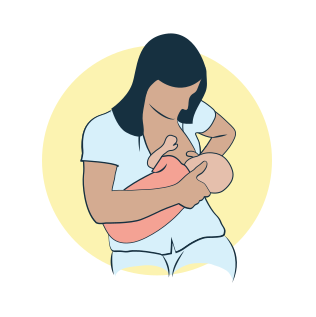
      Cradle Hold

      1. For the right breast, cradle your baby with your right arm. Your baby will be on their left side across your lap, facing you at nipple level.
      2. Your baby’s head will rest on your right forearm with your baby’s back along your inner arm and palm.
      3. Turn your baby’s tummy toward your tummy. Your left hand is free to support your breast, if needed. Pillows can help support your arm and elbow.
      4. To protect your back, avoid leaning down to your baby. Instead, bring your baby to you.
      5. Reverse for the left breast.

      This hold is useful when:

      • Your baby needs help latching on
      • You and your baby are comfortable in this position
      Breastfeeding Holds

      Laid-Back Hold

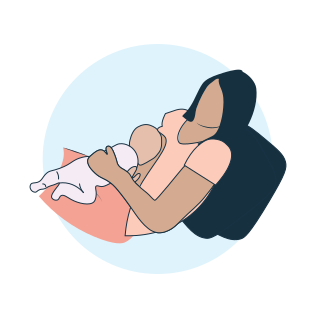
      1. Lean back on a pillow with your baby’s tummy touching yours and their head at breast level. Some moms find that sitting up nearly straight works well. Others prefer to lean back and lie almost flat.
      2. You can place your baby’s cheek near your breast, or you may want to use one hand to hold your breast near your baby. It’s up to you and what you think feels best.
      3. Your baby will naturally find your nipple, latch, and begin to suckle.

      This hold is useful when:

      • Your baby is placed on your chest right after birth
      • You have a strong milk let-down
      • You have large breasts
      • You and your baby are comfortable in this position