Skip to Content Skip to Footer
Indiana WIC logo
  • Lactancia materna
    • Lactancia materna
      Lactancia Materna y Sueño Seguro
    • Lactancia materna
      Alimentación controlada con biberón
    • Lactancia materna
      Lactancia materna Leyes de Indiana
    • Lactancia materna
      Cuidado de uno mismo después de una pérdida
    • Lactancia materna
      Consejera de lactancia de madre a madre
    • Lactancia materna
      ¿Qué está tratando de decirme mi bebé?
    • Lactancia materna
      Pautas de conservación de la leche materna
  • Nutrición y salud
    • Nutrición y salud
      Embarazo
    • Nutrición y salud
      Postparto (después del embarazo)
    • Nutrición y salud
      Manténgase Sana
    • Nutrición y salud
      Bebés
    • Nutrición y salud
      Niños
    • Nutrición y salud
      Padres
    • Nutrición y salud
      Familias
  • Recursos de WIC
    • Recursos de WIC
      Folleto Del Programa Información Para Los Clientes
    • Recursos de WIC
      Elegibilidad para participar en el WIC
    • Recursos de WIC
      Aplicación del INWIC
    • Recursos de WIC
      Guía de referencia rápida de la aplicación móvil INWIC
    • Recursos de WIC
      Guía de la tarjeta WIC EBT
    • Recursos de WIC
      Ubicaciones de los mercados de agricultores
  • Spanish
    • English
    • Burmese
    • hakha chin
    • Creole
    • Arabic
    • Dari
    • Pashto
    • French

Pautas de conservación
de la leche materna

  • Pautas
  • Extracción
  • Conservación
  • Congelamiento
  • Descongelamiento
Download

Pautas de conservación de la leche materna

Estas pautas son para bebés sanos, que nacieron a término, y pueden variar en el caso de bebés enfermos o prematuros. Consulta a tu proveedor de atención médica.1

Leche fresca
Hasta 4 horas

Leche descongelada: 1 o 2 horas

Encimera o mesa:
77 °F/25 °C o más frío

Leche fresca
Hasta 4 días

Nunca vuelvas a congelar leche que ya fue descongelada

Refrigerador:
40 °F/4 °C o más frío

Leche fresca
Dentro de los 6 meses
es lo recomendado

(Hasta 12 meses es aceptable)
Nunca vuelvas a congelar leche que ya fue descongelada

Congelador (con puerta independiente):
0 °F/-18 °C o más frío

Las pautas son solo para uso en el hogar; no para uso hospitalario.1

Extraer leche materna

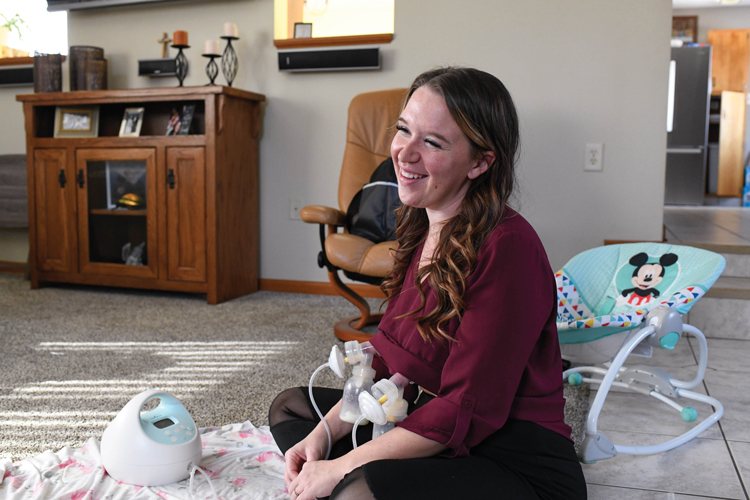
Antes de extraerte leche, lávate bien las manos con agua y jabón.

Revisa todas las piezas y mangueras del extractor para asegurarte de que estén limpias. Cambia de inmediato las mangueras que tengan moho.

Limpia la encimera o la mesa y la parte externa del extractor, incluidos los botones o discos.

Algunas mamás prefieren extraerse la leche directamente en el recipiente donde la almacenarán.

Conservar leche materna

Habla con el cuidador sobre cómo conservar la leche materna.

Utiliza la leche que sobre de una toma en las dos (2) horas siguientes a que el bebé haya terminado.

Habla con el cuidador sobre cómo conservar la leche materna.
Utiliza la leche que sobre de una toma en las dos (2) horas siguientes a que el bebé haya terminado.

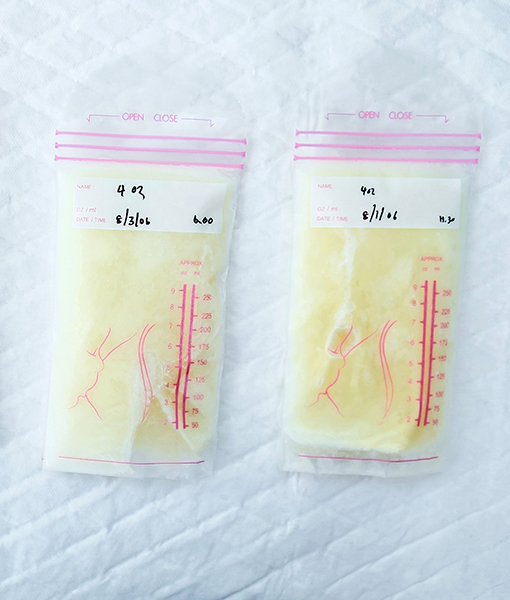
La leche materna puede almacenarse en bolsas para conservar leche materna, recipientes de vidrio o recipientes de plástico duro sin bisfenol A con tapa hermética.

Evita usar fundas para biberones u otras bolsas de plástico desechables para guardar la leche. Si necesitas bolsas para conservar la leche, comunícate con tu clínica local de WIC.

1/12

Etiqueta el recipiente con la fecha en que se extrajo la leche. Si le darás la leche a un cuidador, incluye también el nombre de tu hijo.

Guarda la leche extraída en la parte trasera del congelador o refrigerador, no en la puerta. La temperatura de la puerta varía al abrirla y cerrarla.

Cuando hagas viajes cortos, como para ir y volver del trabajo o de la escuela, puedes guardar la leche extraída en una bolsa isotérmica con bolsas de hielo durante 24 horas como máximo.

Congelar la leche materna

Si no usarás la leche recién extraída o refrigerada en un plazo de cuatro (4) días, congélala de inmediato.
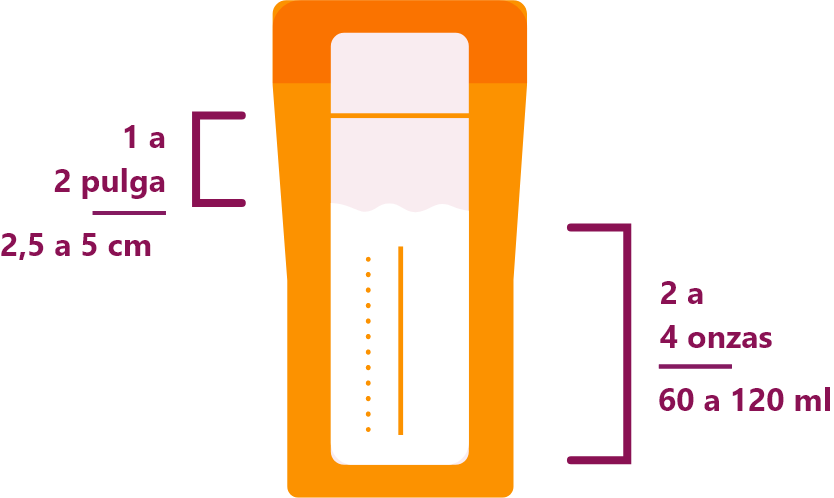
Al congelar la leche, deja una pulgada de espacio en la parte superior del recipiente. La leche materna se expande cuando se congela.

Congela la leche en cantidades de 2 a 4 onzas para evitar desperdiciarla.

Congela las bolsas en posición plana para ahorrar espacio.

Si se produce un corte de electricidad, la leche congelada sigue siendo apta para el consumo si se ven los cristales.

Descongelar y calentar la leche materna

Empieza por usar la leche que lleva más tiempo congelada. Aplica el principio: la primera en congelarse será la primera en usarse.
Si bien algunos bebés prefieren la leche tibia, no es necesario calentar la leche materna. Se puede dar a temperatura ambiente o fría.

La leche puede descongelarse de diferentes maneras:

1: En el refrigerador durante la noche

2: Bajo el grifo de agua tibia

3: En un recipiente con agua tibia

La leche descongelada con agua tibia debe usarse en el plazo de
una (1) hora después de descongelarse o de colocarse en el refrigerador.

La leche descongelada en el refrigerador debe usarse en el plazo de un (1) día (24 horas) después de descongelarse.

Si vas a calentar leche materna, mantén el recipiente cerrado herméticamente. Coloca el recipiente bien cerrado en un recipiente con agua tibia o ponlo bajo el grifo con agua tibia, no caliente. No calientes el recipiente directamente sobre el fuego ni en el microondas. Prueba la temperatura de la leche poniéndote unas gotas en la muñeca. Debería sentirse tibia.
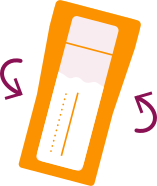
Mueve suavemente la leche (no la agites) para mezclarla, ya que es normal que la leche materna se separe.

No calientes la leche materna en el microondas. El microondas descompone los nutrientes y crea focos de calor que pueden quemar la boca del bebé.

Adaptado de la siguiente fuente:

1. United States Department of Agriculture (USDA), Centers for Disease Control and Prevention (CDC), and Department of Health and Human Services (HHS). (Julio de 2018). Human Milk Storage Guidelines.
https://wicworks.fns.usda.gov/sites/default/files/media/document/Human_Milk_Storage_Guidelines.pdf

Referencias:

Centers for Disease Control and Prevention (CDC). (27 de noviembre de 2023). Breast Milk Storage and Preparation
https://www.cdc.gov/breastfeeding/breast-milk-preparation-and-storage/handling-breastmilk.html

Eglash, A., Simon, L., & The Academy of Breastfeeding Medicine. (2017). ABM Clinical protocol #8: Human milk storage information for home use for full-term infants. Breastfeeding Medicine, 12(7), 390-395.
https://doi.org/10.1089/bfm.2017.29047.aje

Logo for Indiana WIC, a supplemental nutrition program for women, infants, and children.

Comuníquese con nosotros

2 North Meridian Street, 5th Floor Indianapolis, Indiana 46204
800-522-0874
wic.in.gov

Obtenga más información

  • Cómo aplicar
  • Alimentos aprobados
  • Encuentre una clínica

Recursos

Apoyo para la lactancia materna WIC
  • Aplicación INWIC para Android
  • Aplicación INWIC para Apple
  • facebook
  • instagram social

Esta institución es un proveedor que ofrece igualdad de oportunidades.

Cookie PolicyPrivacy Policy

© Brush Art Corporation

  • Email
  • SMS
If you are using multiple emails, separate them with commas.

    SMS Communication Consent

    ×
    If you are using multiple emails, separate them with commas.

      Communication Preferences

      ×
      Download
      Feed Popup
      Side Lying Hold

      Side-Lying Hold

      1. For the right breast, lie on your right side with your baby facing you.
      2. Pull your baby close. Your baby’s mouth should be level with your nipple.
      3. In this position, you can cradle your baby’s back with your left arm and support yourself with your right arm and/or pillows.
      4. Keep loose clothing and bedding away from your baby.
      5. Reverse for the left breast.

      This hold is useful when:

      • You had a C-section
      • You want to rest while baby feeds
      • You are breastfeeding in the middle of the night
      • You and your baby are comfortable in this position
      Cross Cradle Hold 1

      Cross-Cradle Hold

      1. For the right breast, use your left arm to hold your baby’s head at your right breast and baby’s body toward your left side. A pillow across your lap can help support your left arm.
      2. Gently place your left hand behind your baby’s ears and neck, with your thumb and index finger behind each ear and your palm between baby’s shoulder blades. Turn your baby’s body toward yours so your tummies are touching.
      3. Hold your breast as if you are squeezing a sandwich. To protect your back, avoid leaning down to your baby. Instead, bring your baby to you.
      4. As your baby’s mouth opens, push gently with your left palm on baby’s head to help them latch on. Make sure you keep your fingers out of the way.
      5. Reverse for the left breast.

      This hold is useful when:

      • Your baby is premature
      • Your baby has a weak suck
      • Your baby needs help to stay latched
      • Your baby needs extra head support
      • You and your baby are comfortable in this position
      Football Hold

      Clutch or “Football” Hold

      1. For the right breast, hold your baby level, facing up, at your right side.
      2. Put your baby’s head near your right nipple and support their back and legs under your right arm.
      3. Hold the base of your baby’s head with your right palm. A pillow underneath your right arm can help support your baby’s weight.
      4. To protect your back, avoid leaning down to your baby. Bring baby to you instead.
      5. Reverse for the left breast.

      This hold is useful when:

      • You had a C-section
      • You have large breasts
      • You have flat or inverted nipples
      • You have a strong milk let-down
      • You are breastfeeding twins
      • Your baby likes to feed in an upright position
      • Your baby has reflux
      • You and your baby are comfortable in this position
      Breastfeeding Holds

      Cradle Hold

      1. For the right breast, cradle your baby with your right arm. Your baby will be on their left side across your lap, facing you at nipple level.
      2. Your baby’s head will rest on your right forearm with your baby’s back along your inner arm and palm.
      3. Turn your baby’s tummy toward your tummy. Your left hand is free to support your breast, if needed. Pillows can help support your arm and elbow.
      4. To protect your back, avoid leaning down to your baby. Instead, bring your baby to you.
      5. Reverse for the left breast.

      This hold is useful when:

      • Your baby needs help latching on
      • You and your baby are comfortable in this position
      Breastfeeding Holds

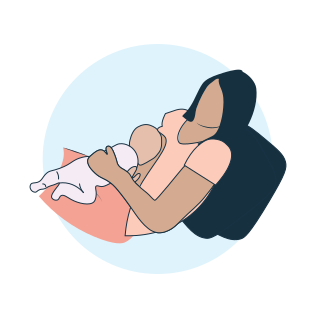
      Laid-Back Hold

      1. Lean back on a pillow with your baby’s tummy touching yours and their head at breast level. Some moms find that sitting up nearly straight works well. Others prefer to lean back and lie almost flat.
      2. You can place your baby’s cheek near your breast, or you may want to use one hand to hold your breast near your baby. It’s up to you and what you think feels best.
      3. Your baby will naturally find your nipple, latch, and begin to suckle.

      This hold is useful when:

      • Your baby is placed on your chest right after birth
      • You have a strong milk let-down
      • You have large breasts
      • You and your baby are comfortable in this position