Skip to Content Skip to Footer
Indiana WIC logo
  • Breastfeeding
    • Breastfeeding
      Breastfeeding & Safe Sleep
    • Breastfeeding
      Breastfeeding Peer Counselor
    • Breastfeeding
      Paced Feeding
    • Breastfeeding
      Breastfeeding Laws
    • Breastfeeding
      What is my baby trying to tell me?
    • Breastfeeding
      Caring For Yourself After Loss
    • Breastfeeding
      Human Milk Storage Guidelines
  • Nutrition and Health
    • Nutrition and Health
      Pregnancy
    • Nutrition and Health
      Postpartum (After Pregnancy)
    • Nutrition and Health
      Stay Healthy
    • Nutrition and Health
      Infants
    • Nutrition and Health
      Children
    • Nutrition and Health
      Fathers
    • Nutrition and Health
      Families
  • WIC Resources
    • WIC Resources
      Program Booklet for Participants
    • WIC Resources
      Eligibility Guidelines
    • WIC Resources
      INWIC App
    • WIC Resources
      INWIC Mobile App Quick Reference Guide
    • WIC Resources
      WIC EBT Card Guide
    • WIC Resources
      Indiana eFMNP
  • English
    • Spanish
    • Burmese
    • hakha chin
    • Creole
    • Arabic

Dad's guide to A Healthy Child

  • Home
  • Eat·Grow·Live Healthy
  • Fathers
  • Dad’s Guide to A Healthy Child
  • Dear Dad
  • Help Me Learn
  • Play Time
  • Let’s Eat
  • Protect Those Shiny New Teeth
  • Health and Safety
  • Car Seats
  • Fatherhood Resources

h2 hide

Dear Dad,

You play an important role in the growth of your child’s body and mind.

Whether you see your children daily or live in a different home, being actively involved in your child’s life makes a big difference. Being present and involved will help them grow to be a healthier, happier, and more successful child and adult.

The quality of your father-child time is more important than the number of hours you spend with your child. The quality of your relationship directly impacts your child’s sense of self-worth.

Children who grow up with an involved father are:

A Plus

39%

more likely to
earn mostly
A’s in school 

Hate

2x

2x

as likely to go to college and find a steady job after high school
  • Don’t compare yourself to your dad or other dads around you. YOU are the one your child looks up to!
bac dad dau reading

Help Me Learn

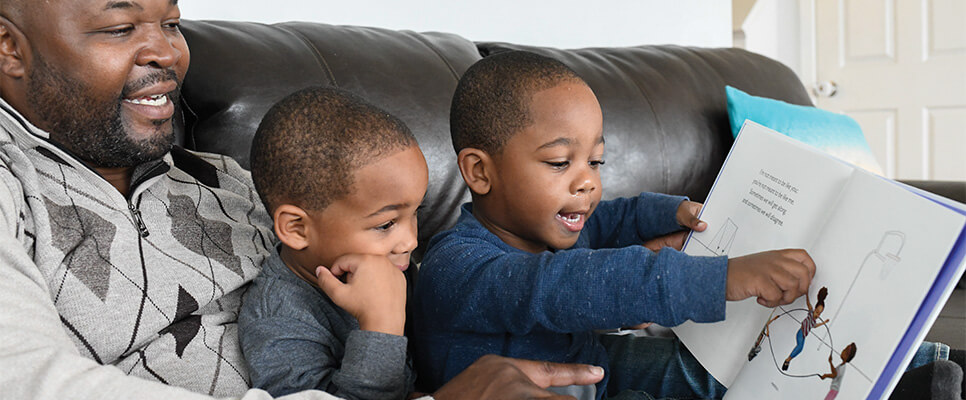
Children learn by watching their parents. Children who have a father actively involved in their daily learning are more likely to be:
  • ready to start
    school
  • + better problem-
    solvers
  • + more friendly toward other people

Children who grow up with an involved father are 60% less likely to be suspended or expelled from school.

A parent is a child’s first teacher. You may not realize it, but you are teaching your child by the simple things you do every day.
You can help your child learn by:
  • Talking about the world around you as you go about your day.
  • Pointing out and saying the colors, animal sounds, letters, and numbers you see and hear.
  • Being together for daily activities such as eating dinner, playing outside, reading, or watching TV.
  • Keep screen time to a minimum to focus on each other.

Whether you are encouraging imagination play or reading to them, simply being together helps your child feel calmer and happier.

Dad’s Guide to A Healthy Child

Play Time

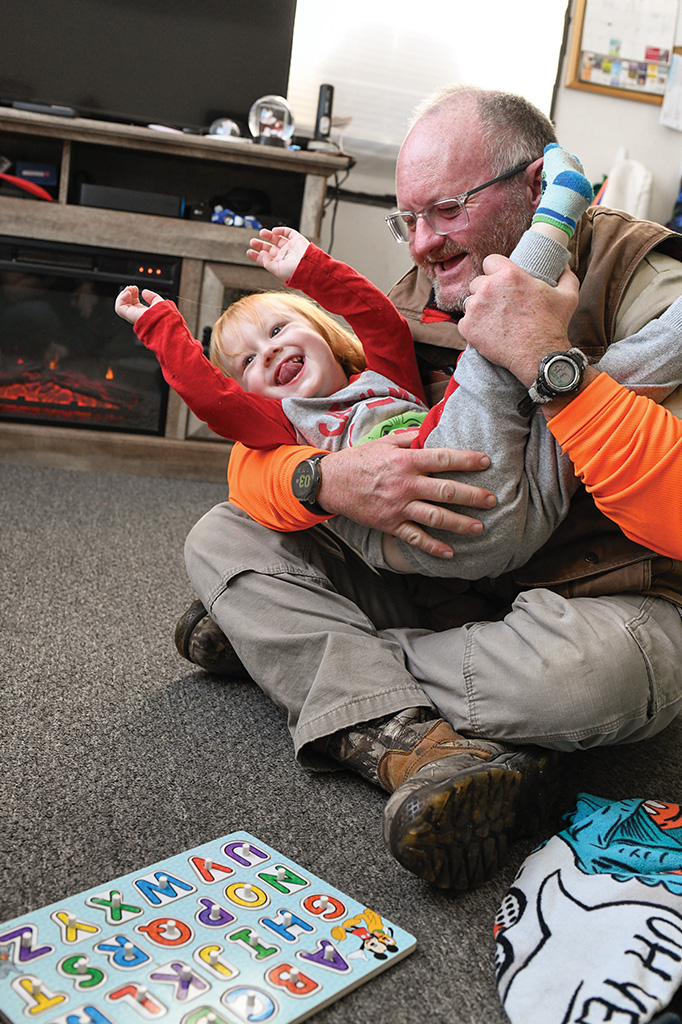
Children learn when they play. Dads typically have a different style of play than moms, and that is okay!
Dads tend to encourage more physical play which teaches children how to:
  • Control feelings of anger.
  • Encourage competition and risk.
  • Manage physical contact while keeping control of their emotions.

Being active with your child helps their bones grow stronger, build muscles, and helps brain development.

Here are a few fun activities to do with your child:
  • Play active games like hide-and-seek, tag, “Simon Says”, or have a race.
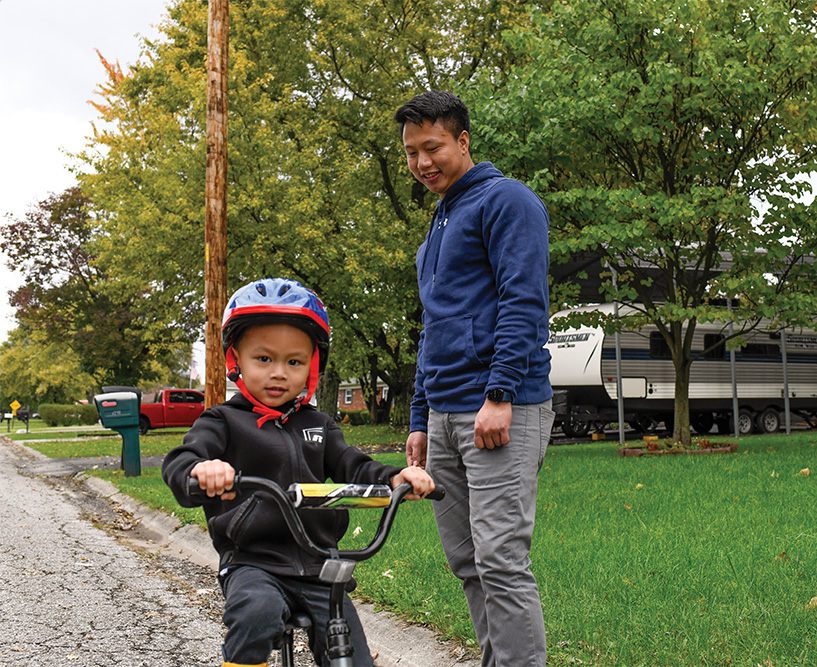
  • Go on a bike ride together.
  • Practice throwing or kicking balls.
  • Go to the park and play on the playground.
  • Kids need to be active throughout the day.

Let's Eat

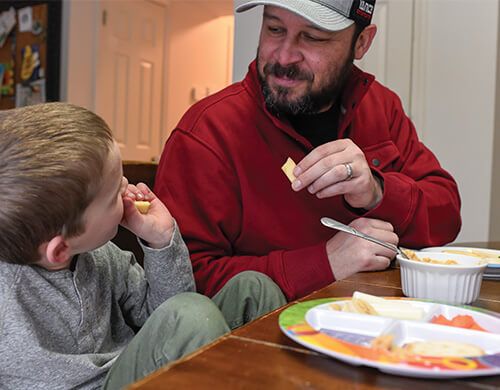
Feeding young children is a hard job. Being present at the dinner table is easy. Having dad present at mealtime is important to a child.

Mealtime is a great time to learn more about your child. Ask your child about their day, their friends, and how they are feeling. This shows your child that you care about them and that they are worthy of your time and attention.

Here are some things you can do to make memories at mealtimes.
  • Eat together as a family.
  • Have your children help cook. They can wash, measure, add, and stir ingredients.
  • Be a role model! Eat the same healthy foods you offer your child.
  • Change the location of meals by eating outside, having a picnic, or even sitting around the coffee table with cushions for chairs.
  • Keep screens off and out of sight to encourage more conversation during mealtimes.

When fathers are present or involved, children are at

2X

lower risk of developing obesity.

Let's Eat
Dad-Dau-Brushing-Teeth

Protect Those Shiny New Teeth

Dental health is just as important as physical health. Be active in keeping your child’s teeth healthy.

  • Brush their teeth twice a day (even if there are only 1 or 2 teeth). Ask your child’s healthcare provider or dentist about what type of toothpaste to use.
  • Start a morning and bedtime routine of you and your child brushing your teeth together. This can be fun for them and they can see how to brush their teeth the right way.
  • Offer only water in between meals and snacks. Your child does not need sweet drinks like soda and Kool-Aid. Limit the amount of juice your child drinks each day.

Health and Safety

Once a child gets moving, it can seem like they never stop. Your child learns how to do more things every day. This means you may need to work even harder to keep them safe.

  • Have your child wear a helmet when they start riding a bike or scooter. Be a good role model and wear your helmet too!
  • Always stay with your child when they are in or near water, such as the bath, a pool, or lake.
  • Make sure your child is up-to-date on all recommended vaccinations. Visit www.cdc.gov/vaccines/schedules to see when your child is due for shots. Call your doctor if you are unsure what shots your child needs.
  • Watch your child closely to keep them safe when they are around water.
Health and Safety

Car Seats

The American Academy of Pediatrics recommends that car seats are only used for traveling purposes. It is recommended to remove the infant from their car seat once you arrive at your destination, especially if they are asleep.

  • Use a car seat for every trip, no matter how short.
  • Use a car seat based on your child’s size and age. You can often find this information on the seat itself.
  • As your child grows, the settings, position, and type of car seat will need to change.
  • Learn how to install the car seat correctly. Strap in your toddler or child the right way.

– Straps should be snug.
– The sliding clip should be at armpit level.
– The car seat itself should move very little when pushed from side-to-side.

To learn more about car seat safety visit:
  • https://www.cdc.gov/injury/features/child-passenger-safety/index.html
  • https://www.nhtsa.gov/vehicle-safety/car-seats-and-booster-seats
Keep your child in a rear-facing car seat until they are at least 2 years old. Do not rush to move to a forward-facing car seat or booster seat even if you have a large child.
Boy-toddler-carseat
Never seat children in front of an airbag. Airbags can kill young children riding in the front seat. Never place a rear-facing car seat in front of an airbag.

Fatherhood Resources

National Fatherhood Initiative

www.fatherhood.org

National Responsible Fatherhood Clearinghouse

https://www.fatherhood.gov

  • Check for fatherhood initiative programs at your local Head Start program or school system.

This institution is an equal opportunity provider.

wic.in.gov
Logo for Indiana WIC, a supplemental nutrition program for women, infants, and children.

Contact Us

2 North Meridian Street, 5th Floor Indianapolis, Indiana 46204
800-522-0874
wic.in.gov

Learn More

  • How to Apply
  • Approved Foods
  • Find a Clinic

Resources

WIC Breastfeeding Support
  • INWIC Android App
  • INWIC Apple App
  • Indiana WIC Link to Facebook page
  • Indiana WIC on Instagram

This institution is an equal opportunity provider.

Cookie PolicyPrivacy Policy

© Brush Art Corporation

  • Email
  • SMS
If you are using multiple emails, separate them with commas.

    SMS Communication Consent

    ×
    If you are using multiple emails, separate them with commas.

      Communication Preferences

      ×
      Download
      Feed Popup
      Side Lying Hold

      Side-Lying Hold

      1. For the right breast, lie on your right side with your baby facing you.
      2. Pull your baby close. Your baby’s mouth should be level with your nipple.
      3. In this position, you can cradle your baby’s back with your left arm and support yourself with your right arm and/or pillows.
      4. Keep loose clothing and bedding away from your baby.
      5. Reverse for the left breast.

      This hold is useful when:

      • You had a C-section
      • You want to rest while baby feeds
      • You are breastfeeding in the middle of the night
      • You and your baby are comfortable in this position
      Cross Cradle Hold

      Cross-Cradle Hold

      1. For the right breast, use your left arm to hold your baby’s head at your right breast and baby’s body toward your left side. A pillow across your lap can help support your left arm.
      2. Gently place your left hand behind your baby’s ears and neck, with your thumb and index finger behind each ear and your palm between baby’s shoulder blades. Turn your baby’s body toward yours so your tummies are touching.
      3. Hold your breast as if you are squeezing a sandwich. To protect your back, avoid leaning down to your baby. Instead, bring your baby to you.
      4. As your baby’s mouth opens, push gently with your left palm on baby’s head to help them latch on. Make sure you keep your fingers out of the way.
      5. Reverse for the left breast.

      This hold is useful when:

      • Your baby is premature
      • Your baby has a weak suck
      • Your baby needs help to stay latched
      • Your baby needs extra head support
      • You and your baby are comfortable in this position
      Football Hold

      Clutch or “Football” Hold

      1. For the right breast, hold your baby level, facing up, at your right side.
      2. Put your baby’s head near your right nipple and support their back and legs under your right arm.
      3. Hold the base of your baby’s head with your right palm. A pillow underneath your right arm can help support your baby’s weight.
      4. To protect your back, avoid leaning down to your baby. Bring baby to you instead.
      5. Reverse for the left breast.

      This hold is useful when:

      • You had a C-section
      • You have large breasts
      • You have flat or inverted nipples
      • You have a strong milk let-down
      • You are breastfeeding twins
      • Your baby likes to feed in an upright position
      • Your baby has reflux
      • You and your baby are comfortable in this position
      Breastfeeding Holds

      Cradle Hold

      1. For the right breast, cradle your baby with your right arm. Your baby will be on their left side across your lap, facing you at nipple level.
      2. Your baby’s head will rest on your right forearm with your baby’s back along your inner arm and palm.
      3. Turn your baby’s tummy toward your tummy. Your left hand is free to support your breast, if needed. Pillows can help support your arm and elbow.
      4. To protect your back, avoid leaning down to your baby. Instead, bring your baby to you.
      5. Reverse for the left breast.

      This hold is useful when:

      • Your baby needs help latching on
      • You and your baby are comfortable in this position
      Breastfeeding Holds

      Laid-Back Hold

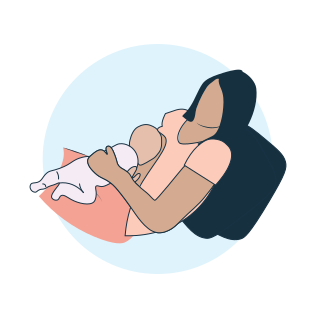
      1. Lean back on a pillow with your baby’s tummy touching yours and their head at breast level. Some moms find that sitting up nearly straight works well. Others prefer to lean back and lie almost flat.
      2. You can place your baby’s cheek near your breast, or you may want to use one hand to hold your breast near your baby. It’s up to you and what you think feels best.
      3. Your baby will naturally find your nipple, latch, and begin to suckle.

      This hold is useful when:

      • Your baby is placed on your chest right after birth
      • You have a strong milk let-down
      • You have large breasts
      • You and your baby are comfortable in this position